A pump that is slightly undersized will not merely water less efficiently. It can leave the furthest drippers dry, slow nutrient turnover in a reservoir and create uneven root-zone conditions that show up later as inconsistent growth. The best hydroponic pumps UK growers can buy are therefore not defined by the biggest litres-per-hour figure on the box. They are the pumps correctly matched to the system, pipework, lift height and operating schedule.
For most indoor systems, reliability, serviceability and stable flow matter more than headline capacity. Start with the irrigation method you are running, then size the pump around the real resistance in the system rather than the nominal output.
Choose a pump for the system, not the shelf
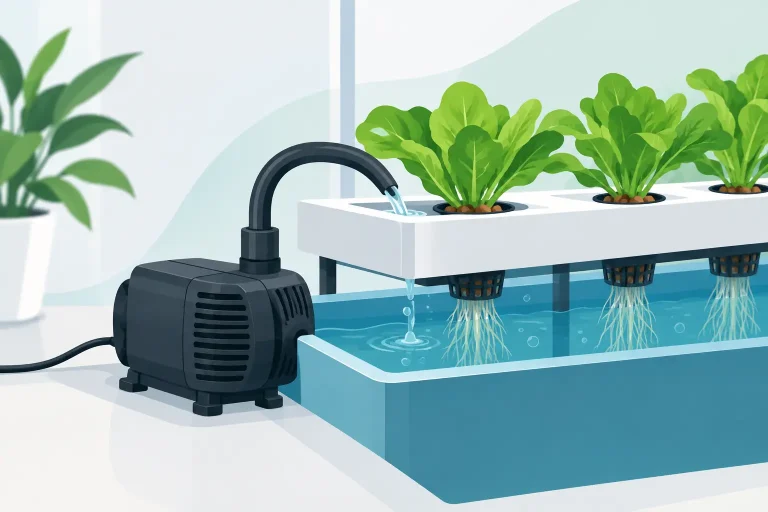
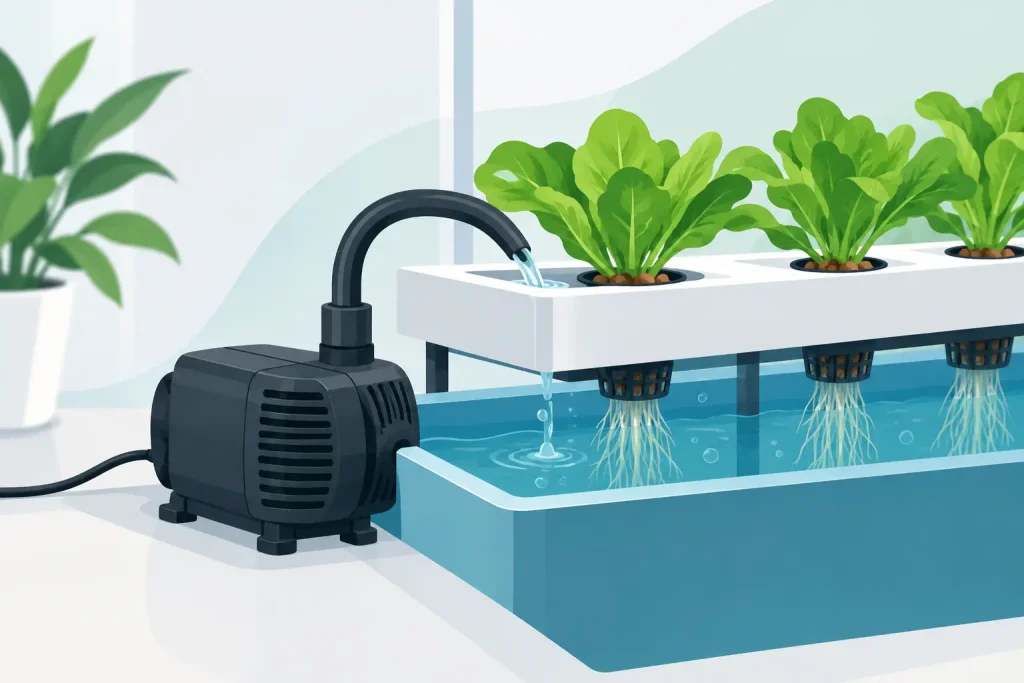
Submersible water pumps cover most small and medium hydroponic installations. They sit inside the nutrient reservoir, run quietly, are straightforward to fit and usually provide enough output for drip irrigation, NFT channels, small flood-and-drain tables and recirculating systems. They are a practical default where the pump is continuously submerged and nutrient solution is kept clean.
External pumps suit larger reservoirs, longer pipe runs and setups where easier access for maintenance is a priority. They can produce stronger pressure and are not adding heat directly into the nutrient solution, but they need correct plumbing, secure hose connections and protection from leaks. For a tent-scale system, this extra complexity is often unnecessary. For multi-table irrigation, it can be worth it.
Air pumps are a separate purchase for systems that need active aeration. DWC buckets, deep-water culture modules and heavily stocked reservoirs benefit from a correctly sized air pump, airline and air stone. Do not treat an air pump as a substitute for a circulation pump: oxygenating the solution and moving it around the system are different jobs.
Flow rate: start with litres per hour
Pump flow is usually stated in litres per hour, or L/h. This is useful as a starting point, but the stated figure is normally measured at zero head height with no pipework, elbows, filters or manifolds attached. Once solution is lifted out of a reservoir and forced through distribution lines, actual flow falls.
For a basic drip system, calculate the combined output of every dripper running at the same time, then allow a sensible margin. If eight drippers require 2 L/h each, the absolute minimum is 16 L/h at the dripper line. In practice, a pump must also overcome the vertical lift and friction losses, so selecting solely around 16 L/h would be a mistake.
A useful working approach is to choose a pump capable of delivering roughly 20 to 30 per cent more than the calculated requirement at your intended operating height. This gives you room to use an inline valve or bypass loop to fine-tune flow, rather than discovering there is no adjustment available because the pump is already at its limit.
More flow is not always better. A pump that is far too large can cause drippers to spray or pulse, overflow NFT channels, disturb roots in smaller systems and raise solution temperature. It also wastes power when it is throttled back heavily. Match capacity to the job, then retain a manageable adjustment range.
Read the head-height chart
Maximum head height is the vertical distance a pump can push water before flow stops. It is not the height at which the pump will still deliver the manufacturer’s quoted L/h. This distinction matters when a reservoir is on the floor and the irrigation manifold is at canopy level or above.
Measure from the nutrient level in the reservoir to the highest point of the delivery line, rather than from the base of the tank. Then check the pump curve where available. A pump rated at 1,000 L/h with a 2 m maximum head may deliver only a fraction of its rated volume at 1.5 m, especially once narrow tubing and fittings are added.
For flood-and-drain, good fill speed is essential. The table needs to flood evenly within the timer’s on-period, while the overflow and return arrangement must safely handle that volume. Measure the tray volume, allow for growing media displacement, and choose a pump that can fill the working volume within the planned cycle. Test this with plain water before adding nutrients.
Matching pumps to common hydroponic systems
Drip irrigation is generally the most forgiving application, provided the pump supplies enough pressure for even distribution. A compact submersible pump, a filter and correctly sized distribution pipework are usually sufficient for small pots, coco systems and run-to-waste layouts. If you use pressure-compensating drippers, confirm their minimum operating pressure as well as their stated flow rate.
NFT needs consistent, controlled delivery rather than high pressure. Too little flow can leave channels unevenly supplied; too much can deepen the nutrient stream and reduce root-zone oxygen. Use a pump with enough headroom to feed every channel evenly, then regulate the final flow with a valve. Keep the pump intake clear and use a pre-filter where root debris can reach the reservoir.
DWC and recirculating DWC require two separate decisions. The air pump must provide enough aeration for the number and size of air stones, while the water pump, if fitted, should turn over the system without creating excessive turbulence. In a recirculating layout, choose fittings and pipe diameters that allow buckets and control tanks to equalise properly. A strong pump cannot compensate for restrictive return plumbing.
Flood-and-drain systems need a pump that can lift solution quickly and repeatedly. Duty cycle matters here because the pump may run several times per day throughout a crop cycle. Check that the pump is suitable for repeated operation, that its impeller can be cleaned, and that the timer has an adequate minimum switching interval.
Aeroponic systems are less forgiving. Fine-spray systems rely on stable pressure and clean emitters, and many require a dedicated high-pressure pump rather than a standard aquarium-style submersible unit. If the system depends on misting for root moisture, build in filtration and keep a backup plan. A blocked nozzle or failed pump can affect plants quickly.
The details that prevent pump problems
Nutrient residue, root fragments and growing-media debris shorten pump life and reduce flow. Position the pump where it cannot sit directly in settled sediment, clean the intake cover regularly and flush pipework between crops. A simple pre-filter can make maintenance easier, but it must also be checked often enough that it does not become the restriction.
Tubing size matters. Narrow pipe creates resistance, particularly over longer runs or where several elbows are used. Keep the main feed line generously sized and reduce down closer to the drippers or individual outlets. Avoid sharp kinks, loose push-fit connectors and unnecessary joins inside the grow area.
Heat is another practical consideration. Every submersible pump transfers some energy into the nutrient solution. In a small reservoir under powerful lighting, that additional heat may be enough to push temperatures beyond the preferred range. A more efficient pump, a larger nutrient volume, improved reservoir placement or an external pump may be the better answer, depending on the setup.
Noise is worth considering when the grow room is close to living space. Rubber feet, a foam-free vibration mat beneath the reservoir and correctly secured pipework can reduce humming and rattling. Do not wrap a pump in material that blocks cooling or restricts its intake.
What to check before ordering
Before choosing from the best hydroponic pumps UK range, confirm the required flow at working height, the outlet size, compatible hose diameter and whether the pump will run continuously or on a timer. Also check the available reservoir depth, cable length and whether a replacement impeller is obtainable.
For an air pump, count air outlets and air stones, then account for the depth of the water. Deeper stones create more back pressure, so an air pump that seems ample on paper can become weak in a tall DWC bucket. Gang valves let you balance individual lines, but they cannot create capacity that is not there.
A spare pump is sensible for any system where irrigation failure would cause rapid stress, particularly automated drip, recirculating and aeroponic setups. It does not need to be an identical unit for every grower, but it should be capable of keeping the system running while the main pump is cleaned or replaced.
Set up the pump with clean water first, measure the actual delivery at the furthest outlet and adjust before plants depend on it. That short test is usually more valuable than choosing the highest-rated model on the page.