
Introduction
Hydroponic farming, a revolutionary method of growing plants without soil, has captured the interest of home gardeners, commercial farmers, and educators alike. This innovative approach not only maximizes space and water usage but also offers a sustainable solution to food production challenges. But where did this game-changing practice begin? In this article, we’ll explore the origins of hydroponic farming, tracing its journey from ancient civilizations to the cutting-edge techniques used today.
The Origins of Hydroponic Farming: A Historical Overview
The concept of hydroponic farming might seem like a modern invention, but its roots stretch back thousands of years. Let’s delve into some of the earliest examples of hydroponic techniques.
1. The Hanging Gardens of Babylon One of the Seven Wonders of the Ancient World, the Hanging Gardens of Babylon, is often cited as an early example of hydroponic farming. Built around 600 B.C., these gardens were renowned for their lush, tiered greenery, which was sustained through a complex irrigation system. Although the exact methods remain a mystery, many historians believe the plants were grown in a soilless medium, nourished by water rich in dissolved nutrients.
2. The Floating Gardens of the Aztecs Another ancient civilization that embraced hydroponic techniques was the Aztecs. Around 1150 A.D., they developed “chinampas,” or floating gardens, on the shallow lakes surrounding their capital, Tenochtitlan. These man-made islands were constructed from layers of aquatic vegetation and nutrient-rich mud, allowing crops to thrive in a water-based environment.
3. Early Research in the 17th Century The scientific exploration of hydroponics began in the 17th century when researchers like Sir Francis Bacon and John Woodward conducted experiments on plant growth in water. These early studies laid the groundwork for modern hydroponic farming, proving that plants could absorb nutrients directly from water without the need for soil.
The Evolution of Modern Hydroponic Farming
Fast forward to the 20th century, and hydroponic farming saw significant advancements, driven by the need for efficient food production in challenging environments.
1. The Work of Dr. William Frederick Gericke In the 1930s, Dr. William Frederick Gericke, a professor at the University of California, popularized the term “hydroponics.” He successfully grew large tomato plants in his backyard using a nutrient-rich water solution, demonstrating the commercial potential of hydroponic farming. His work caught the attention of scientists and farmers worldwide, leading to further research and development.
2. Hydroponics During World War II During World War II, hydroponic farming was used to supply fresh produce to U.S. troops stationed on barren Pacific islands. The ability to grow food in remote, soil-less environments highlighted the practicality and importance of hydroponic methods.
3. The Rise of Commercial Hydroponics In the latter half of the 20th century, hydroponic farming began to scale commercially. Greenhouses equipped with hydroponic systems started to appear across Europe and the United States, offering a solution to the challenges of urban farming, resource scarcity, and climate change.
How Hydroponic Farming Works: The Science Behind the Practice
At its core, hydroponic farming involves growing plants in a nutrient-rich water solution, often using a soilless medium like perlite, coconut coir, or rockwool. Here’s a closer look at the key components:
1. The Nutrient Solution The nutrient solution is the lifeblood of any hydroponic system. It contains a balanced mix of essential minerals, including nitrogen, phosphorus, potassium, calcium, and magnesium, that plants need for healthy growth. This solution is carefully monitored and adjusted to ensure optimal nutrient uptake.
2. The Growing Medium While hydroponic farming eliminates the need for soil, plants still require support. A growing medium like perlite, vermiculite, or rockwool is used to anchor the plant’s roots while allowing for efficient water and nutrient absorption.
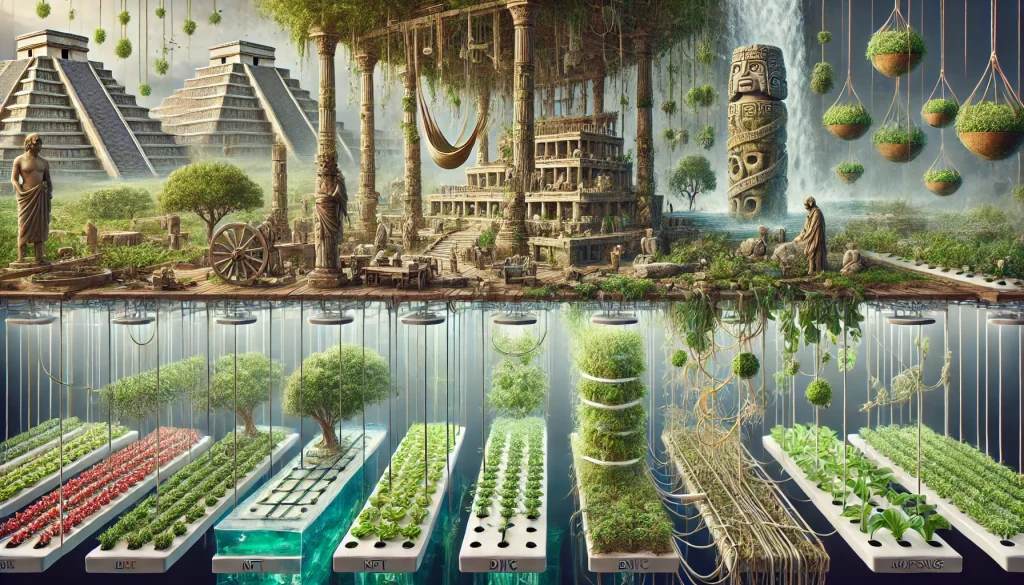
3. The Hydroponic System There are several types of hydroponic systems, each with its unique approach to delivering water and nutrients to the plants:
- Nutrient Film Technique (NFT): A shallow stream of nutrient-rich water flows over the roots, providing constant access to oxygen and nutrients.
- Deep Water Culture (DWC): Plant roots are suspended in a nutrient solution, with oxygen supplied by an air pump.
- Drip System: Nutrient solution is delivered to the base of each plant through a drip line, allowing for precise control of water and nutrients.
- Aeroponics: Plants are suspended in the air, with their roots misted with a nutrient solution, promoting maximum oxygen exposure.
The Benefits of Hydroponic Farming: Why It’s the Future of Agriculture
Hydroponic farming offers several advantages over traditional soil-based agriculture, making it an attractive option for both home gardeners and commercial farmers.
1. Water Efficiency Hydroponic systems use up to 90% less water than traditional farming methods, as the nutrient solution is recirculated, reducing waste.
2. Space-Saving Hydroponic systems can be set up in small spaces, making them ideal for urban environments where land is limited.
3. Faster Growth Plants grown hydroponically often reach maturity 25% faster than those grown in soil, thanks to the controlled environment and constant access to nutrients.
4. Pesticide-Free Because hydroponic systems are typically housed indoors or in greenhouses, they are less susceptible to pests and diseases, reducing the need for chemical pesticides.
5. Year-Round Production Hydroponic farming allows for year-round crop production, regardless of weather conditions, ensuring a steady supply of fresh produce.
Recommended Products from Hydroponic Centre
For those interested in starting their hydroponic journey, Hydroponic Centre offers a range of products to get you started:
- Wilma Large 4 Pot System: Ideal for home gardeners, this system provides a compact, efficient setup for growing a variety of plants.
- Autopot Pot System: This self-watering system is perfect for beginners, allowing for easy maintenance and consistent plant growth.
Hydroponic Farming Made Simple: A Kid-Friendly Explanation
Imagine growing plants without any dirt—just water! That’s what hydroponic farming is all about. Instead of planting seeds in the ground, we put them in water that’s filled with all the nutrients they need to grow big and strong. It’s like giving the plants a yummy smoothie every day! This method is super cool because it saves water, grows plants faster, and can be done anywhere—even in your own room!
Conclusion
Hydroponic farming has come a long way since its ancient beginnings, evolving into a modern solution for sustainable food production. Whether you’re a home gardener looking to grow fresh vegetables year-round or a commercial farmer seeking efficient ways to boost crop yields, hydroponics offers endless possibilities. By understanding its history and science, you can take part in this agricultural revolution and help shape the future of farming.
For more information, visit https://hydroponic-centre.co.uk/ and chat to one of our advisors!



