
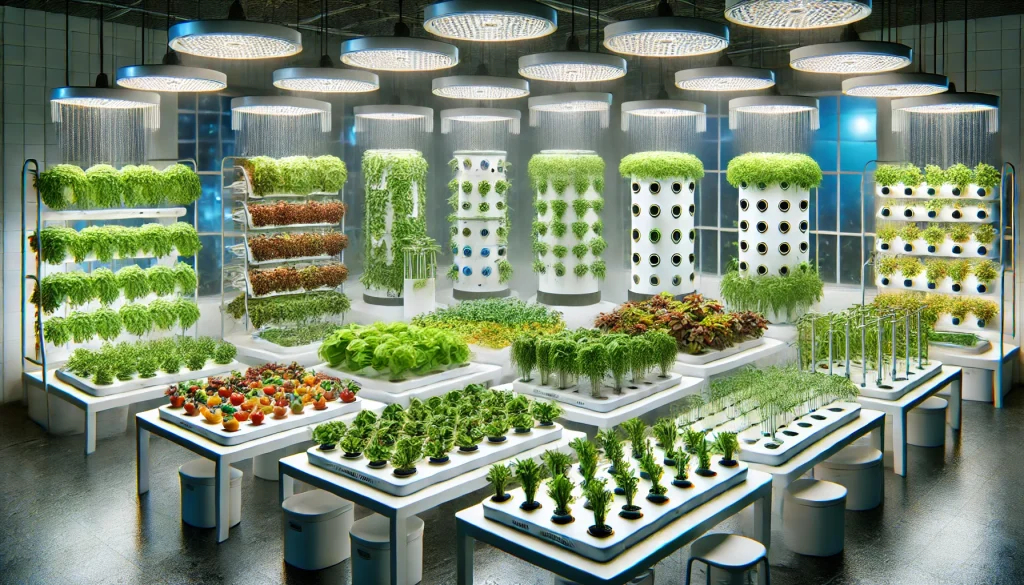
Choosing the right hydroponic system can be a game-changer whether you’re a home gardener or a commercial farmer. With a variety of options available, selecting the best system to meet your specific needs is crucial. In this guide, we’ll explore different hydroponic systems, evaluate their pros and cons, and recommend products that can help you achieve success in your hydroponic endeavours.
Understanding Hydroponics: What Is It?
Before diving into which system is best, let’s briefly understand what hydroponics is. Hydroponics is a method of growing plants without soil, using nutrient-rich water solutions. This innovative approach allows for greater control over the growing environment, leading to faster growth rates, higher yields, and more efficient use of resources.
Different Types of Hydroponic Systems
Hydroponic systems can be broadly categorized into six main types. Each system has its unique features, benefits, and ideal applications. Here’s an overview:
- Deep Water Culture (DWC)
- How it Works: Plants are suspended in nutrient-rich water, allowing the roots to remain submerged.
- Pros: Easy to set up and maintain; ideal for beginners.
- Cons: Limited to specific plants like lettuce and herbs.
- Best For: Home gardeners looking for a simple system to grow leafy greens.
- Nutrient Film Technique (NFT)
- How it Works: A thin film of nutrient solution flows over the roots, providing constant nourishment.
- Pros: Efficient use of water and nutrients; suitable for a variety of plants.
- Cons: Requires careful monitoring to avoid root dehydration.
- Best For: Commercial farmers growing herbs, lettuce, or strawberries.
- Ebb and Flow (Flood and Drain)
- How it Works: Plants are periodically flooded with nutrient solution, then drained to allow oxygen to reach the roots.
- Pros: Versatile and adaptable to various plant types.
- Cons: Requires a timer and pump, increasing the complexity.
- Best For: Gardeners who want to experiment with different crops.
- Drip System
- How it Works: Nutrient solution is slowly dripped onto the base of each plant.
- Pros: Highly customizable and scalable.
- Cons: Can be prone to clogging; requires regular maintenance.
- Best For: Both home gardeners and commercial farmers seeking a scalable system.
- Aeroponics
- How it Works: Plants are suspended in the air, with roots misted with nutrient solution.
- Pros: High oxygen levels lead to rapid growth; efficient use of water and nutrients.
- Cons: High maintenance and requires precise control.
- Best For: Advanced gardeners and commercial farmers looking for high yield.
- Wicking System
- How it Works: Plants draw up nutrient solution through a wick from a reservoir below.
- Pros: Simplest system, no pumps or electricity needed.
- Cons: Best suited for small plants; not ideal for large-scale use.
- Best For: Beginners and home gardeners with limited space.
Choosing the Right System: Factors to Consider
When selecting the best hydroponic system for your needs, consider the following factors:
- Space Availability: Smaller spaces may benefit from vertical NFT systems, while larger areas can accommodate more complex setups like aeroponics.
- Type of Plants: Certain plants thrive better in specific systems. For instance, leafy greens do well in DWC, while fruiting plants may need a more robust system like Ebb and Flow.
- Budget: Hydroponic systems range from affordable DIY kits to more expensive, high-tech solutions. It’s essential to balance cost with your long-term goals.
- Experience Level: Beginners may find success with simpler systems like wicking or DWC, while more experienced gardeners can explore advanced systems like aeroponics.
Why Hydroponics?
Hydroponics offers several advantages over traditional soil-based gardening, including:
- Water Efficiency: Uses up to 90% less water than soil gardening.
- Faster Growth: Plants grow up to 50% faster due to optimal nutrient delivery.
- Space Efficiency: Vertical and indoor systems allow for gardening in small or urban spaces.
- Fewer Pests: Reduced exposure to soil-borne diseases and pests.
- Higher Yields: With controlled environments, plants often produce higher yields.
Top Product Recommendations
Based on your gardening goals, here are some top hydroponic products available on our website that can help you get started or enhance your current setup:
- DWC Systems: Ideal for beginners and small-scale gardeners.
- Ebb and Flow Systems: A versatile choice for gardeners looking to diversify their crops.
- Aeroponic Systems: Best for experienced growers aiming for maximum efficiency.
Simplified Explanation for a 10-Year-Old
Imagine you want to grow a plant, but instead of putting it in the dirt, you place it in water with special plant food. This is called hydroponics. It’s like giving your plant a super smoothie all the time, helping it grow big and strong really fast. There are different ways to do this, like letting the roots sit in the water, dripping water onto them, or even spraying them with mist. Each way works best for different plants, so you pick the one that works best for what you want to grow.
Conclusion
Choosing the right hydroponic system depends on your specific needs, whether you’re a home gardener or running a commercial farm. Each system has its advantages, and with the right products, you can achieve excellent results. Explore our recommended systems and start your hydroponic journey today.
For more information and to shop our full range of products, visit Hydroponic Centre.



