
Introduction
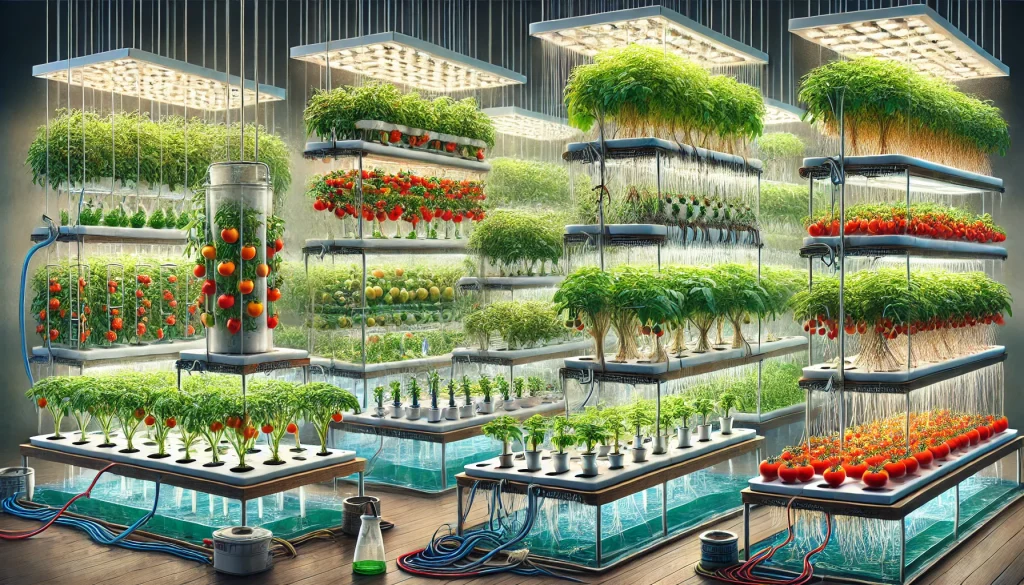
Growing tomatoes hydroponically is a fantastic way to get larger, juicier fruits faster. Hydroponic systems provide ideal growing conditions by delivering nutrients directly to the roots, ensuring efficient growth. But with so many options, which system is the best for tomatoes? This article will explore the top hydroponic systems, their pros and cons, and the best practices for maximizing your tomato yields.
1. Deep Water Culture (DWC)
Deep Water Culture (DWC) is a popular method among home gardeners due to its simplicity and effectiveness. In DWC, the roots are suspended in a nutrient-rich water solution. This setup provides constant access to oxygen and nutrients, which is vital for fast-growing plants like tomatoes.
- Advantages: Low maintenance, great for beginners, excellent oxygen supply for roots.
- Products to consider: Advanced Nutrients pH Perfect Connoisseur Grow A&B 5L
2. Drip Irrigation Systems
A drip irrigation system is a versatile and scalable option suitable for both home gardeners and commercial farmers. The system delivers a controlled drip of nutrient solution directly to the plant’s root zone, ensuring efficient water and nutrient use.
- Advantages: Precise water control, minimal waste, scalable.
- Products to consider: Flood & Drain Systems
3. Aeroponics
Aeroponics offers high efficiency by misting the roots with a nutrient solution, creating optimal oxygenation. While it’s one of the more advanced systems, it’s known for promoting rapid growth, making it a solid choice for serious tomato growers.
- Advantages: High oxygenation, excellent for root development, fast growth.
- Products to consider: Advanced Hydroponics of Holland.
4. Nutrient Film Technique (NFT)
NFT systems are popular for leafy greens but can be adapted for tomatoes. In this setup, a thin film of nutrient solution flows continuously over the roots, which are exposed to the air, maximizing nutrient uptake and oxygen supply.
- Advantages: Efficient use of water and nutrients, continuous supply, compact.
5. Wick System
The Wick System is one of the simplest hydroponic setups, ideal for small-scale home gardening. Nutrients are absorbed through a wick that connects the growing medium and the nutrient reservoir.
- Advantages: No pumps required, simple and passive system.
- Best For: Hobbyists or those with limited space.
Comparing Hydroponic Systems for Tomatoes
- Best for Beginners: DWC and Wick Systems
- Best for Commercial Farmers: Drip Irrigation and Aeroponics
- Most Cost-Effective: NFT System
Final Thoughts: What’s the Best Choice?
The best hydroponic system for growing tomatoes depends on your goals. If you’re a home gardener looking for an easy-to-manage setup, DWC or the Wick system might be best for you. Commercial growers may benefit more from the scalability and control offered by aeroponic or drip systems.
Recommendations for Tomato-Specific Nutrients
Tomatoes are heavy feeders, requiring a rich nutrient mix to thrive. Here are some products from Hydroponic Centre UK that can help:
- Big Bud Coco – Boosts fruit production and size.
- Shogun Fertilisers – Perfect for enhancing nutrient absorption.
A Simple Explanation for Kids
Imagine you’re growing a tomato plant without any soil, just water and air! The plant’s roots are given “superfood” water that has all the vitamins and minerals it needs to grow big and strong. Depending on the system, the roots might be hanging in water, getting sprayed like a shower, or having food dripped on them slowly. The best part? You can grow tomatoes faster and bigger this way!



