
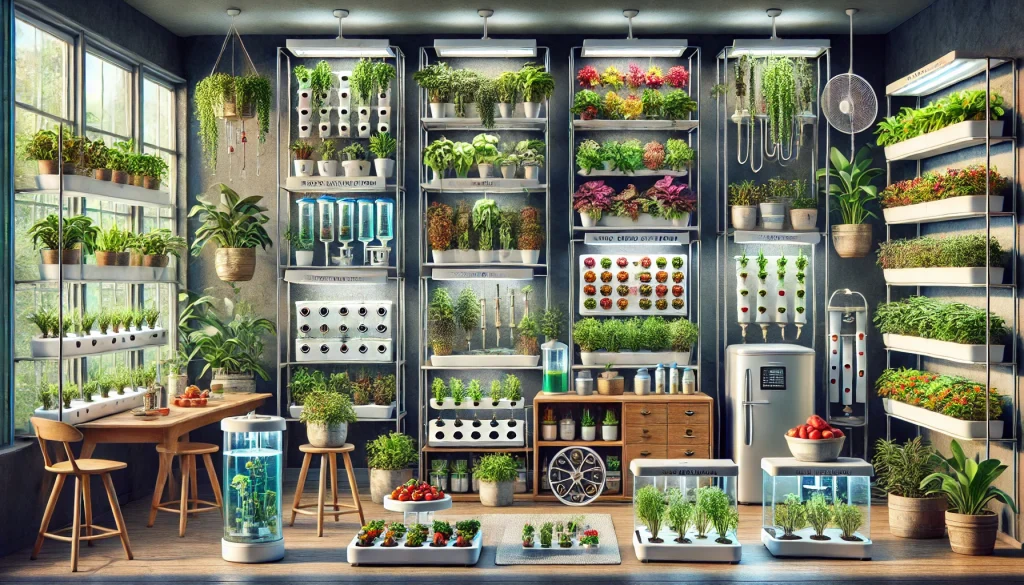
Hydroponic gardening is becoming increasingly popular among home gardeners who want to grow fresh herbs, vegetables, and fruits indoors or in limited spaces. Unlike traditional gardening, hydroponics doesn’t require soil, and instead uses nutrient-rich water to grow plants more efficiently. In this article, we’ll dive deep into the best hydroponic systems for home use, their advantages, and how to pick the perfect one for your indoor garden.
What is Hydroponics?
Hydroponics is a method of growing plants without soil, using a nutrient-rich water solution to deliver essential nutrients directly to the roots. The absence of soil allows for faster growth, higher yields, and more control over the plant’s environment.
Types of Hydroponic Systems for Home Use
- Wick System
The wick system is one of the simplest and most beginner-friendly hydroponic setups. This system uses a wick to draw nutrient-rich water to the plant’s roots from a reservoir. It requires no pumps, making it a passive and low-maintenance system ideal for herbs and leafy greens.
Best For: Small-scale growers, herbs, and beginners. - Deep Water Culture (DWC)
Deep Water Culture systems are perfect for home gardeners looking for rapid plant growth. Plants are suspended in a nutrient solution with their roots fully submerged, while an air pump delivers oxygen to prevent root rot. This system is easy to maintain and perfect for a variety of plants like lettuce, basil, and tomatoes.
Best For: Home gardeners with medium to large spaces, fast-growing crops. - Nutrient Film Technique (NFT)
NFT systems are efficient and widely used in commercial setups, but they can also be scaled down for home use. This system involves a continuous flow of nutrient-rich water over plant roots, which allows for better nutrient absorption. NFT works well for lighter plants like lettuce, strawberries, and spinach.
Best For: Enthusiasts with some experience and enough space for longer channels. - Drip System
Drip hydroponics delivers nutrient-rich water directly to each plant’s root zone through small tubes. The system can be easily customized for any size and plant type, offering great flexibility. It’s a bit more complex, but the control it provides is highly rewarding.
Best For: Home gardeners looking to grow larger plants such as cucumbers or tomatoes. - Aeroponics
Aeroponics is one of the more advanced systems, using mist to deliver nutrients to plant roots suspended in air. It’s highly efficient and can result in faster growth rates, but requires more maintenance and technical knowledge.
Best For: Advanced users seeking maximum yields in minimal space.
How to Choose the Best Hydroponic System for Your Home
To select the best system, consider these factors:
- Space Availability: Systems like the Wick or DWC are compact and work well in small spaces, while NFT and Aeroponics need more room.
- Budget: Wick systems and DWC are often the most affordable, whereas Aeroponics and Drip systems can be more costly.
- Plant Type: Certain systems are better suited for specific plants. For instance, DWC is excellent for fast-growing vegetables, while the Wick system is perfect for herbs.
- Maintenance Level: If you prefer a low-maintenance system, the Wick or DWC might be your best bet. Aeroponics, on the other hand, requires more regular attention.
Recommended Hydroponic Products for Home Use
Here are some general hydroponic products you might consider when starting your indoor garden:
- AutoPot Pot Systems
The AutoPot system is an excellent automatic, soil-free option for beginners and advanced users alike. It eliminates the need for pumps and timers by using gravity to water plants efficiently. - Flexi Tank
For those needing water storage solutions in their hydroponic system, the Flexi Tank offers an easy-to-store and transport option that integrates well into home setups.
Benefits of Hydroponics for Home Gardeners
- Water Efficiency: Hydroponics systems use up to 90% less water than traditional gardening.
- Faster Growth: Plants grow faster due to the constant availability of nutrients and water.
- Space Saving: Many hydroponic systems are vertical or compact, ideal for small apartments or urban homes.
- Pest Control: With no soil, there’s a reduced chance of soil-borne pests and diseases.
- Year-Round Growing: Indoors, you can grow fresh produce all year long, independent of outdoor weather conditions.
Frequently Asked Questions (FAQs)
- Is hydroponic gardening expensive to start?
It depends on the system. Basic setups like the Wick system are inexpensive, while more complex systems like Aeroponics may require a larger investment. - What are the best plants to grow in hydroponics?
Herbs, lettuce, strawberries, cucumbers, and tomatoes thrive in hydroponic systems. - How much maintenance does a hydroponic system need?
Most systems need regular monitoring of nutrient levels and pH, though simpler systems like the Wick require very little. - Do hydroponic plants taste different from soil-grown ones?
No, the taste of hydroponic produce is often as good, if not better, than soil-grown plants due to precise nutrient control.
A Simple Explanation for Kids (10 Years Old)
Hydroponics is a way to grow plants without using dirt. Instead, we use water that’s mixed with food for the plants, like vitamins for humans. This helps the plants grow faster and bigger! Some systems let the roots sit in the water, while others spray the roots with mist. Hydroponics can be done indoors, so you can grow your own vegetables or fruits at home, even in winter!



