
Introduction
Soilless farming is no longer just an experimental idea—it’s a proven, efficient way to grow food. Whether you’re cultivating lettuce in your kitchen or running a large-scale produce farm, hydroponic and aeroponic systems offer exciting, high-yield solutions.
Both methods replace soil with innovative ways of delivering nutrients directly to plant roots. But the way they do it—and the results they produce—are different enough that choosing the right one for your needs is essential.
What Is Hydroponic Farming?
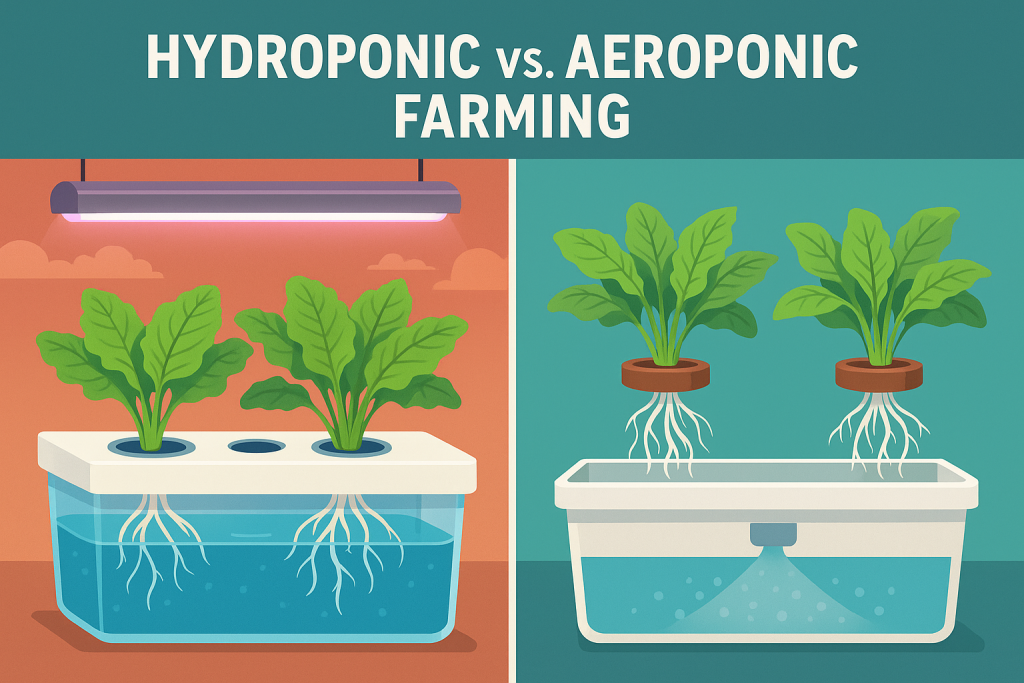
Hydroponics is the science of growing plants in nutrient-rich water instead of soil. The plant roots are supported by a medium like clay pebbles, rockwool, or coco coir, and nutrients are dissolved into the water for easy absorption.
Key features of hydroponics:
- Nutrients are delivered through a water-based solution
- Uses inert growing media for root stability
- Suitable for indoor and outdoor setups
- Popular crops: lettuce, tomatoes, strawberries, herbs
What Is Aeroponic Farming?
Aeroponics takes the soilless concept a step further—plants are suspended in the air with their roots hanging freely. A fine mist of nutrient-rich water is sprayed directly onto the roots at regular intervals.
Key features of aeroponics:
- Roots are exposed to air for maximum oxygen access
- Nutrients are applied via a fine mist
- No growing media is required
- Extremely efficient water use
- Popular for leafy greens, herbs, and research purposes
How Hydroponics Works vs. How Aeroponics Works
| Feature | Hydroponics | Aeroponics |
|---|---|---|
| Root Environment | Submerged in water with media | Hanging in air, misted with nutrients |
| Nutrient Delivery | Constant or timed flow in water | Timed nutrient misting |
| Oxygen Access | Moderate | Very high |
| Water Use | Low | Extremely low |
| Setup Complexity | Beginner to advanced | Advanced |
Pros and Cons of Hydroponics
Pros:
- Easier to set up for beginners
- Reliable and predictable plant growth
- Works well with many crop types
- Lower risk of root dehydration
Cons:
- Requires nutrient solution purchases
- Water reservoirs can heat up and stress roots
- Uses slightly more water than aeroponics
Pros and Cons of Aeroponics
Pros:
- Maximum oxygen exposure boosts growth rates
- Extremely water-efficient
- No need for growing media
- Can produce higher yields in less space
Cons:
- More technical and expensive to set up
- Requires backup power for pumps/misters
- Roots can dry out quickly if system fails
Which Is Better for Home Gardeners?
If you’re just starting out, hydroponics is the friendlier choice. It’s easier to set up, more forgiving, and still gives excellent results.
However, if you love tech, precision, and pushing your plants to their limits, aeroponics can be a fun challenge with potentially higher yields.
Which Is Better for Commercial Farmers?
Commercial hydroponics offers predictable output and easier scaling for large operations. It’s also simpler to train staff on hydroponic management.
Aeroponics, while more complex, can produce more per square meter—making it attractive for high-value crops in controlled environments. But it requires skilled maintenance and reliable backup systems.
Cost, Maintenance, and Learning Curve
Cost:
- Hydroponics: Lower starting cost
- Aeroponics: Higher due to precision pumps and nozzles
Maintenance:
- Hydroponics: pH and nutrient monitoring, occasional cleaning
- Aeroponics: pH and nutrient monitoring, mist nozzle cleaning, backup systems
Learning Curve:
- Hydroponics: Easy to moderate
- Aeroponics: Moderate to advanced
10-Year-Old-Friendly Summary
Imagine you have two magic gardens with no dirt:
- Hydroponics is like putting plant roots in a bath of vitamin water so they can drink all they want.
- Aeroponics is like hanging plant roots in the air and giving them a vitamin spray shower.
Both grow plants fast, but hydroponics is easier for beginners, while aeroponics is like high-tech gardening for pros.
Conclusion
Hydroponics and aeroponics are both incredible ways to grow plants without soil. Hydroponics offers ease and stability, while aeroponics delivers speed and efficiency. Your choice depends on your space, budget, and comfort with technology.
Whether you’re growing basil in your kitchen or lettuce for a local market, there’s a soilless farming system that can help you produce fresh, healthy crops all year round.
Recommended Products from Hydroponic-Centre.co.uk
- Origin Dripper Kits – Highly adaptable dripper irrigation systems ideal for hydroponic cultivation. They enable precise and efficient nutrient delivery directly to plant roots, making them perfect for both small and expanded setups.
- Green Man Systems – Air Kit 12 – A high-performance air pump designed to enhance oxygenation in your hydroponic or aeroponic system. It includes 12 air stones for even bubble distribution and durable tubing for easy setup.
Why These Products Stand Out
- Origin Dripper Kits work for hydroponic enthusiasts aiming for control and scalability. Their precision and flexibility fit right into sections discussing setup simplicity and home or commercial use.
- Green Man Systems Air Kit 12 is perfect to highlight when emphasizing the critical role of oxygen in root health—whether discussing hydroponics or aeroponics.



