
Introduction
For centuries, soil has been the foundation of farming. It’s familiar, natural, and abundant. But today, hydroponics—growing plants without soil using nutrient-rich water—is transforming the way we think about food production.
From hobby gardeners growing herbs in their kitchens to commercial farms producing vegetables in vertical towers, the debate of hydroponics vs soil is hotter than ever. Each method has its strengths and challenges.
So, let’s dig into the pros and cons of hydroponics and soil farming to see which is best for your garden or farm.
What Is Hydroponics?
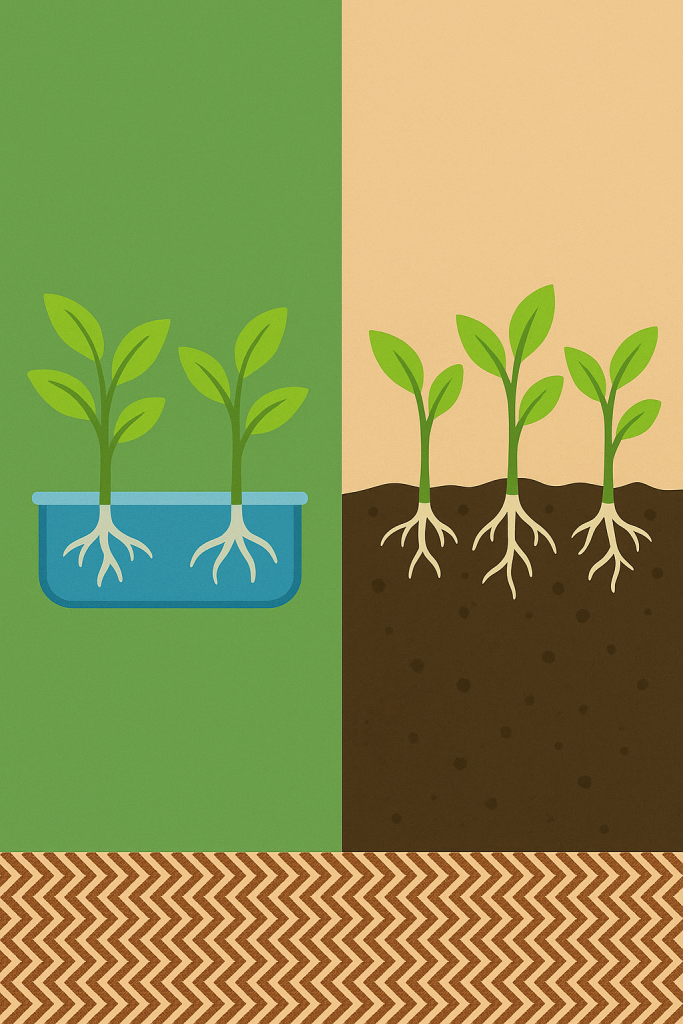
Hydroponics is a soilless growing method where plants receive nutrients from a water-based solution. The roots may be suspended in water or supported by inert media like clay pebbles, rockwool, or coco coir.
Benefits of Hydroponics:
- Plants grow 30–50% faster than in soil
- Uses up to 90% less water than traditional farming
- Ideal for urban areas or small spaces
- Works year-round, indoors or outdoors
Recommended Hydroponic Products
- Origin Dripper Kits – simple yet effective nutrient delivery
- Bluelab Combo Meter – measures pH, EC, and temperature at once
- Hailea Nutrient Chillers – ensures nutrient solution stays cool
What Is Soil Growing?
Soil farming is the traditional method where plants grow directly in the earth, taking nutrients from natural matter, compost, and microbes.
Benefits of Soil:
- Low setup cost (seeds + soil = simple)
- Builds soil health and biodiversity
- Feels natural and satisfying for gardeners
- Less reliance on equipment and monitoring
Hydroponics vs Soil: Pros and Cons
Hydroponics Pros
✅ Faster growth and higher yields
✅ Efficient use of water and nutrients
✅ Less pest and soil-borne disease pressure
✅ Space-saving, ideal for indoor growing
Hydroponics Cons
❌ Higher setup cost
❌ Requires electricity and equipment
❌ Needs careful monitoring (pH, nutrients, temperature)
❌ Not always certified organic
Soil Pros
✅ Familiar, natural, low-cost start
✅ Builds long-term soil fertility
✅ Easy to start outdoors without extra equipment
✅ Supports natural ecosystems
Soil Cons
❌ Slower growth rates
❌ Vulnerable to soil pests, weeds, and diseases
❌ High water demand (depends on climate and soil type)
❌ Weather-dependent, limiting year-round production
Key Differences at a Glance
| Feature | Hydroponics | Soil Growing |
|---|---|---|
| Growth Speed | 30–50% faster | Slower |
| Water Use | Very low | Higher |
| Setup Cost | Medium to high | Low |
| Space Use | Small, scalable indoors | Needs land |
| Pests/Diseases | Fewer, controlled | More soil-borne risks |
| Sustainability | Saves water/space, uses tech | Builds biodiversity, natural cycles |
Which Is Better for Home Gardeners?
If you’re short on space, want to grow indoors, or like experimenting with modern growing methods, hydroponics is a great option.
If you have an outdoor garden and prefer a natural, low-tech approach, soil remains a satisfying and effective choice.
Top Picks for Home Hydroponics:
- Origin Dripper Kits – beginner-friendly and easy to maintain
- Bluelab Combo Meter – keeps pH and nutrients in check
Which Is Better for Commercial Farmers?
For commercial farming, hydroponics often delivers higher yields and consistency, making it ideal for large-scale production and urban vertical farms.
Soil farming still has its place, especially for organic-certified crops, but it’s more vulnerable to climate and land limitations.
Top Picks for Commercial Hydroponics:
- Bluelab pH Controller WiFi – automated nutrient balance management
- Hailea Nutrient Chillers – stabilises large hydroponic systems
FAQs
Q: Do hydroponic plants taste different from soil-grown ones?
A: Not really—flavour depends more on nutrients and care than the method. Many hydroponic crops taste fresher due to faster harvest cycles.
Q: Is hydroponics cheaper than soil?
A: Soil is cheaper to start with, but hydroponics can save money long-term through higher yields and reduced water use.
Q: Is hydroponics eco-friendly?
A: Yes—hydroponics saves water and reduces land use, though it does rely on technology and energy.
10-Year-Old-Friendly Summary
Think of it like this:
- Soil is the old way—plants eat from the ground. It’s simple but slow.
- Hydroponics is the new way—plants drink “vitamin water” and grow super fast, even without dirt.
Both grow yummy food—hydroponics is quick and clean, soil is natural and easy.
Conclusion
Both hydroponics and soil farming have their place in today’s world.
- Hydroponics = fast growth, efficient water use, ideal for modern farms and indoor growing.
- Soil = traditional, simple, and great for those who love natural gardening.
Your choice depends on your space, goals, and budget. Whether you grow herbs in your kitchen or run a large farm, understanding both systems helps you get the best results.



