
Introduction
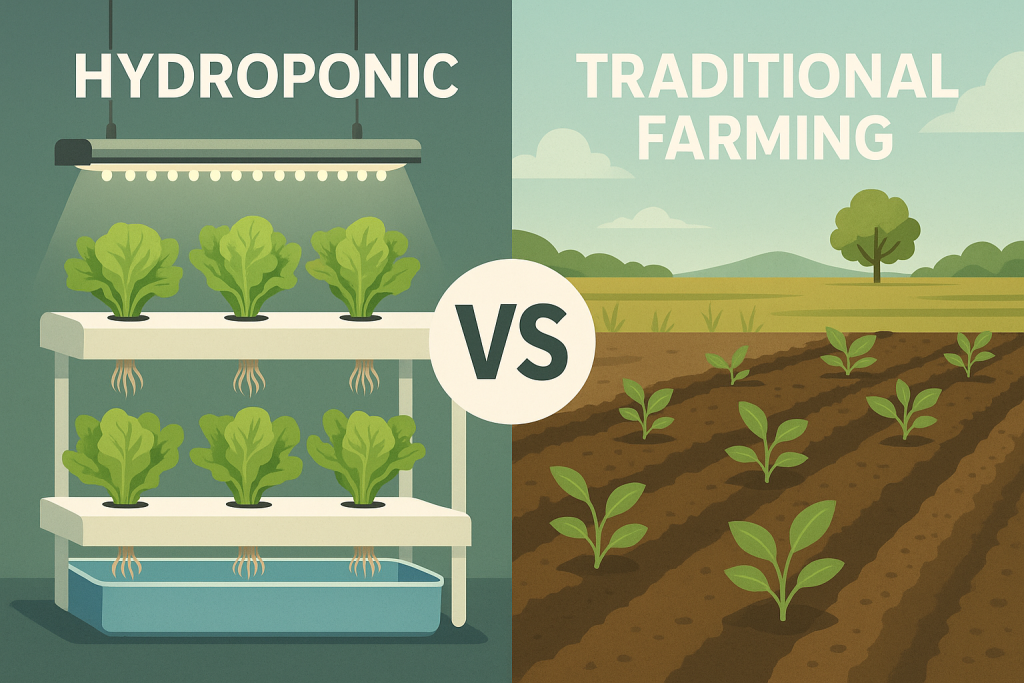
For thousands of years, farming meant soil, sun, and water. This is what we call traditional farming. But today, new technology like hydroponics—growing plants in water enriched with nutrients—is reshaping how we produce food.
Both methods can grow healthy, delicious crops, but they work very differently. So, is hydroponics the future of farming, or does traditional farming still hold the crown? Let’s dive into the pros, cons, and key differences between the two.
What is Hydroponics?
Hydroponics is a method of growing plants without soil. Instead, roots are either suspended in water or supported by inert media like clay pebbles, rockwool, or coco coir. Nutrients are dissolved in the water so plants get exactly what they need, when they need it.
Benefits of Hydroponics:
- Up to 90% less water use than traditional farming
- Plants grow 30–50% faster
- Works year-round, indoors or outdoors
- Requires less space, making it ideal for cities
Recommended Hydroponic Products
- Origin Dripper Kits – precise nutrient delivery, ideal for home or commercial setups
- Bluelab Combo Meter – easy monitoring of pH, EC, and temperature
- Hailea Nutrient Chillers – keep your nutrient solution at the right temperature
What is Traditional Farming?
Traditional farming is the age-old method of planting crops in soil, using natural sunlight, rainfall, and fertilizers. It relies on the natural ecosystem to provide nutrients and conditions for plant growth.
Benefits of Traditional Farming:
- Familiar and accessible worldwide
- Lower setup costs—just soil, seeds, and water
- Builds biodiversity and supports soil health
- Often linked with organic certification
Hydroponics vs Traditional Farming: Key Differences
| Feature | Hydroponics | Traditional Farming |
|---|---|---|
| Growth Speed | 30–50% faster | Natural pace, slower |
| Water Use | Up to 90% less | High water demand |
| Space Efficiency | Great for urban/indoor growing | Requires farmland |
| Setup Cost | Higher (equipment, pumps, monitoring) | Lower (basic tools and land) |
| Pests/Diseases | Lower, no soil pests | Higher, soil-borne problems common |
| Environmental Impact | Conserves water, less land needed | Maintains soil ecosystems |
Pros and Cons of Hydroponics
Pros:
✅ Faster growth and higher yields
✅ Saves water and space
✅ Fewer pests and weeds
✅ Works year-round
Cons:
❌ Higher startup cost
❌ Requires electricity and monitoring
❌ More technical knowledge needed
Pros and Cons of Traditional Farming
Pros:
✅ Familiar and natural
✅ Low setup costs
✅ Builds soil health and ecosystems
✅ Easier for beginners outdoors
Cons:
❌ Slower growth rates
❌ More vulnerable to pests and weather
❌ Uses more water and land
❌ Harder to grow year-round in some climates
Which is Better for Home Gardeners?
- If you have limited space, want to grow indoors, or live in a city, hydroponics is the smarter choice.
- If you have garden land and love natural growing, soil farming will feel more rewarding.
Which is Better for Commercial Farmers?
For large-scale commercial farming, hydroponics offers higher yields per square metre and predictable results, especially for crops like lettuce, tomatoes, and herbs.
Traditional farming still dominates bulk crops like wheat, rice, and corn, where huge land areas are available.
FAQs
Q: Does hydroponics make plants taste different?
A: No—flavour depends on crop variety and nutrients, not the method. Many hydroponic crops taste fresher.
Q: Which is cheaper, hydroponics or soil?
A: Soil is cheaper to start with, but hydroponics can give more yield over time.
Q: Which is more eco-friendly?
A: Hydroponics saves water and land, while traditional farming supports biodiversity. Both can be sustainable in different ways.
10-Year-Old-Friendly Summary
Imagine two gardens:
- In traditional farming, plants grow in dirt, drink rain, and eat food from the soil. It’s simple, but slower.
- In hydroponics, plants skip the dirt and drink a “vitamin water shake.” They grow super fast, even inside a house.
Both grow food. One is natural and easy, the other is fast and modern.
Conclusion
Hydroponics and traditional farming both have strengths.
- Hydroponics = fast growth, efficient, great for modern farming and city spaces.
- Traditional farming = simple, natural, and eco-friendly in its own way.
Your choice depends on your space, goals, and resources. But one thing is clear: the future of farming will likely include both working together.



