
Introduction
Farming has always meant soil, seeds, water, and sunshine. But in recent decades, hydroponics—the practice of growing plants without soil—has gained enormous popularity among home gardeners and commercial farmers.
With its ability to save water, speed up growth, and work in small spaces, hydroponics is being hailed as the future of farming. But does that mean soil-based farming will disappear? Let’s explore the possibilities.
What is Hydroponic Farming?
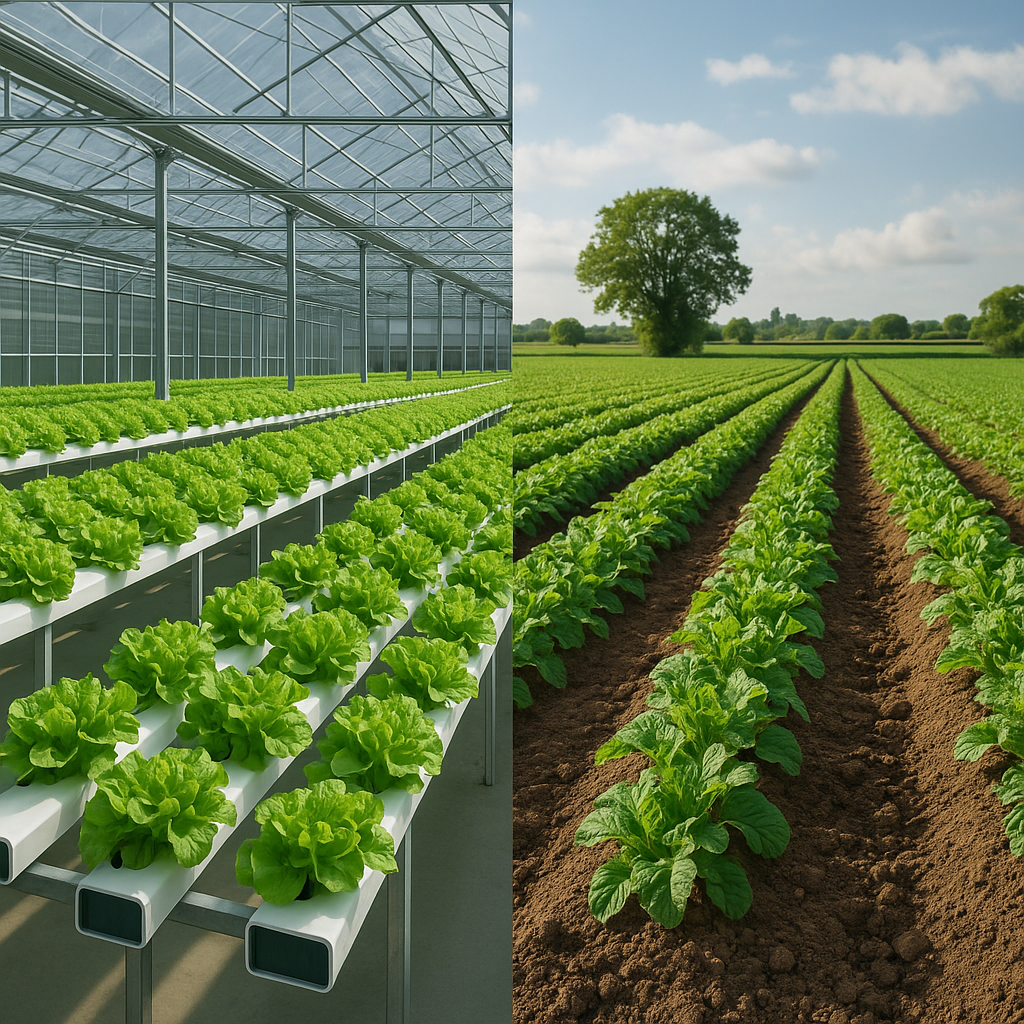
Hydroponic farming grows plants in nutrient-rich water instead of soil. The roots get oxygen, water, and nutrients directly, without depending on soil quality.
There are several systems:
- NFT (Nutrient Film Technique): Thin stream of water runs past roots.
- Deep Water Culture: Plants float on nutrient-rich reservoirs.
- Drip Systems: Nutrients drip directly to each plant.
- Aeroponics (close cousin): Roots hang in the air, misted with nutrients.
Check out Origin Dripper Kits at Hydroponic Centre for an easy entry into hydroponics.
What is Soil Farming?
Soil farming—the traditional way—uses dirt as the natural growing medium. Soil stores nutrients, holds water, and harbours microbes that support plant growth. It also supports biodiversity, from earthworms to pollinators.
Soil farming has been humanity’s foundation for thousands of years and continues to be the backbone of global food production.
Hydroponics vs Soil: The Key Differences
| Factor | Hydroponics | Soil Farming |
|---|---|---|
| Growth Speed | 30–50% faster | Natural pace, slower |
| Water Use | Saves up to 90% | High demand |
| Land Use | Works in small/urban spaces | Requires farmland |
| Startup Cost | Higher (equipment, pumps, monitors) | Lower (basic tools + land) |
| Pests & Weeds | Few (no soil diseases) | Many (soil-borne issues) |
| Sustainability | Conserves water, scalable | Maintains ecosystems & biodiversity |
The Advantages of Hydroponic Farming
- Water Efficiency: Uses only what plants drink, recycles the rest.
- Faster Growth: Direct nutrient delivery accelerates development.
- Year-Round Growing: Indoors or in greenhouses, not weather-dependent.
- Space-Saving: Perfect for urban farming or vertical setups.
The Advantages of Soil Farming
- Low Startup Costs: Seeds + soil = instant garden.
- Natural Ecosystem: Soil microbes and worms enhance fertility.
- Organic Farming Compatibility: Easier to certify as organic.
- Biodiversity Support: Healthy soil sustains wildlife.
The Limitations of Hydroponics
- High Initial Investment in equipment.
- Technical Knowledge required for nutrient balancing.
- Energy Use: Many systems rely on electricity.
The Limitations of Soil Farming
- Dependent on weather and rainfall.
- Uses more water than hydroponics.
- Slower crop cycles.
- Soil erosion and pests can reduce yields.
Will Hydroponics Replace Soil Farming?
The truth: No, not completely.
Hydroponics is excellent for high-value crops like lettuce, strawberries, tomatoes, herbs, and cucumbers. It’s efficient, scalable, and ideal for cities where land is scarce.
But soil farming is still unmatched for large-scale staple crops like wheat, rice, and corn. Hydroponics isn’t yet cost-effective for these globally important foods.
So, the future isn’t hydroponics replacing soil. It’s a hybrid model, where both work side by side.
Best for Home Gardeners
- Hydroponics = perfect for indoor growing, small spaces, herbs, and year-round supply.
- Soil = great if you have outdoor space and want the joy of natural gardening.
Best for Commercial Farmers
- Hydroponics = higher yields per square metre, controlled quality, predictable output.
- Soil = more economical for staple crops and large land farming.
Product Recommendations from Hydroponic Centre
- Origin Dripper Kits – beginner-friendly systems.
- Bluelab Combo Meter – accurate monitoring.
- Hailea Nutrient Chillers – keep water temps stable.
- Bluelab pH Controller WiFi – automate nutrient control.
FAQs
Q: Is hydroponic farming organic?
A: Not always—it depends on the nutrient source.
Q: Does hydroponic food taste different?
A: No—taste comes from crop variety and care, not soil.
Q: Which is cheaper?
A: Soil is cheaper at first, but hydroponics can yield more long-term profit.
A 10-Year-Old-Friendly Summary
Imagine two gardens:
- One grows in dirt. Plants drink water and eat food from the soil.
- One grows in water with plant vitamins. Plants skip the dirt, grow faster, and don’t need as much space.
Soil farming is simple and natural. Hydroponics is fast and futuristic. Neither will disappear—they’ll work together to grow our food.
Conclusion
Hydroponics won’t fully replace soil farming—but it will continue to expand where land and water are limited. Together, hydroponics and soil will ensure we can feed a growing world.
Ready to start your own hydroponic garden? Explore our website for more information and professional products. https://hydroponic-centre.co.uk/



