
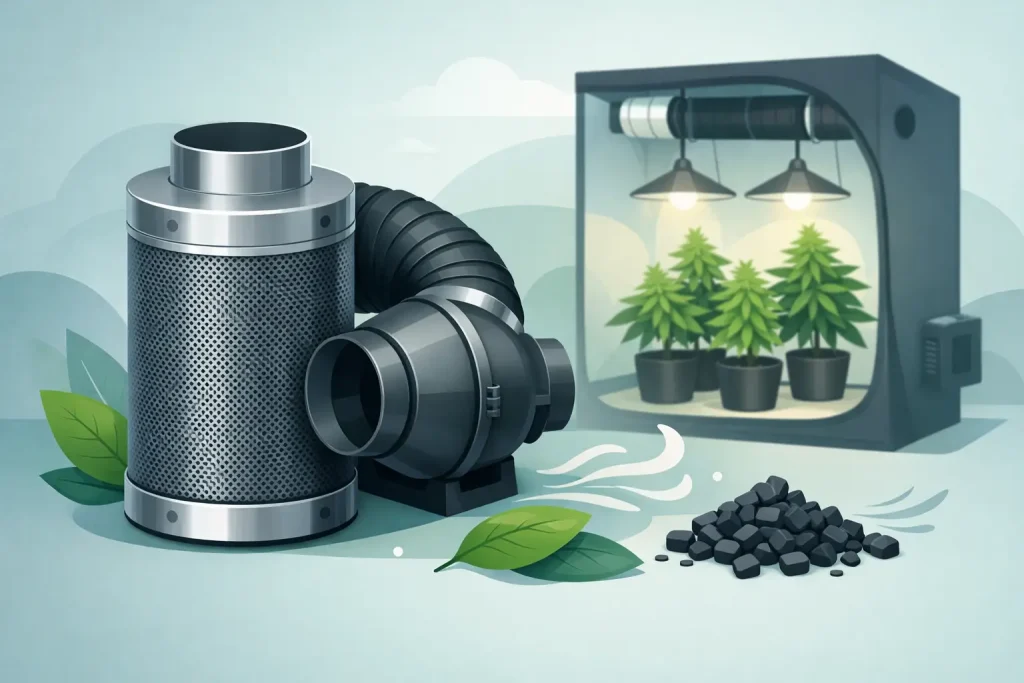
If your tent smells fine with the door zipped but the whole room changes the moment extraction kicks in, the issue is rarely the fan alone. Choosing the best carbon filter for grow tent use comes down to matching airflow, carbon quality and duct layout properly. Get that wrong and even a decent filter can underperform.
Odour control is not a cosmetic extra. In a working grow room, it is part of environmental management. A carbon filter should scrub exhausted air without choking your fan, upsetting tent pressure or forcing you into noisy, inefficient extraction just to keep smells contained.
What makes the best carbon filter for grow tent use?
The short answer is capacity, build quality and fit with the rest of your ventilation kit. A filter is only as good as the system around it. If the fan is oversized, the ducting is restrictive or the tent is leaking around poorly sealed ports, even a premium filter can look weak.
The best units use quality activated carbon with enough bed depth to give air proper contact time. That matters more than marketing claims. Lightweight filters with thin carbon packing often start well enough, then lose effectiveness quickly once humidity rises or flowering gets heavy.
You also want a solid metal body, decent flange fitment and a pre-filter sleeve that actually stays in place. On a practical level, those details affect lifespan, maintenance and how easy the unit is to mount inside a tent without turning installation into a wrestling match.
Start with extraction size, not brand
Most growers make the same mistake first time round. They shop by tent size only, buy a filter with the right flange diameter, then assume the job is done. It is more accurate to size the filter to the fan’s real airflow in the system, not the fan’s headline figure on the box.
A 4 inch setup in a small propagation or veg tent has very different demands from a 6 inch fan pulling through a reflector, several bends of ducting and a warm flowering environment. Every bend, reducer and length of flexible duct cuts performance. So does a silencer. By the time the system is running under load, actual airflow is usually lower than the nominal rating.
That can work in your favour if the filter is sensibly matched. Carbon filters perform better when air moves through them at an appropriate rate. Push too much air through too fast and odour molecules simply do not spend enough time in the carbon bed.
A practical sizing rule
If your extractor fan is rated near the upper limit of a filter, do not assume it is a perfect match. For flowering tents, it is often better to run a slightly larger filter with a fan controller than to run a small filter flat out. You get better contact time, lower noise and a bit of headroom when temperatures climb.
That is especially useful in summer, when UK indoor growers often need to extract harder just to keep canopy temperature under control.
Carbon quality matters more than glossy packaging
Activated carbon is not all the same. Better filters generally use high-grade virgin activated carbon, often from Australian mined sources or similarly reputable grades, because the pore structure is more consistent and better suited to trapping airborne organic compounds.
In plain terms, cheap carbon saturates faster and tends to be less reliable in demanding flower rooms. A proper carbon bed with good density gives you longer service life and more predictable odour control. That is what you are paying for.
The trade-off is weight. A serious filter is heavier, and in a tent that means checking your bars, straps and mounting points. It is worth it. If a filter feels suspiciously light for its size, there is usually a reason.
Airflow, resistance and negative pressure
A carbon filter should work with your extraction system, not against it. All filters add resistance, but some do it more efficiently than others. A poorly designed filter can drag airflow down enough to create heat issues while still not fully dealing with smell.
Your target is stable negative pressure in the tent. The tent walls should pull in slightly when extraction is running. That tells you air is being drawn through passive intakes and exhausted through the filter rather than leaking unfiltered air out through gaps and seams.
If the tent is ballooning, or staying dead neutral, the problem may not be the filter at all. Intake fans, open ports or ducting mistakes can reduce negative pressure and let odour escape before it ever reaches the carbon.
Signs your filter is undersized
The usual signs are smell during lights on, stronger odour in late flower, fan noise increasing as you try to compensate, and heat building up because extraction cannot keep pace. In that situation, replacing like for like is often a wasted purchase. Moving up a size is usually the smarter fix.
Matching filter size to tent size
For small tents, a 4 inch filter and extractor combination is common and often adequate if the duct run is short and the light load is sensible. Mid-size tents frequently suit a 5 inch or 6 inch setup better, especially under HID or higher-powered LED fixtures that add heat to the space.
Larger flowering tents, multi-light spaces and heavy-feeding cultivars with strong terpene output usually justify a 6 inch or 8 inch filter system. Not because bigger is always better, but because odour control gets harder when plant mass, humidity and heat all rise together.
This is where growers need to be realistic. If you are pushing a tent hard, the best carbon filter for grow tent performance is rarely the smallest unit you can squeeze into the corner. It is the one that keeps up under peak demand without forcing the fan to run at maximum all cycle.
Don’t ignore humidity and filter lifespan
High humidity shortens carbon filter effectiveness. When air is too damp, the carbon’s adsorption capacity is compromised, and odour control drops off faster. If your late flower environment regularly runs too wet, replacing filters more often will not fix the root issue.
A decent dehumidification strategy and proper lights-off climate control protect the filter as much as they protect the crop. That matters for cost over time. A premium filter that lasts properly in a stable environment can be better value than a cheap unit replaced every cycle or two.
As a rough expectation, a good carbon filter may give around 12 to 24 months of useful service, but that depends on workload, humidity and whether the pre-filter is kept clean. There is no universal number.
Installation details that affect results
Inside the tent, the standard approach is filter first, then fan, then ducting out. That puts the filter at the hot, smelly top of the space where it can scrub air before it leaves. It is efficient and tidy if headroom allows.
If space is tight, some growers move parts of the system outside the tent. That can work, but every extra bend and join increases the chance of leaks and airflow loss. Keep the run as short and straight as possible.
Make sure the pre-filter sleeve is fitted, clamps are tight and unused tent ports are sealed. These are basic points, but they are where a lot of odour-control problems start. In practice, the best equipment still needs a clean install.
Is a premium filter worth it?
Usually, yes – if flowering odour is a serious concern and you run your room consistently. Better filters cost more upfront but tend to deliver stronger carbon fill, tighter manufacturing tolerances and more dependable performance under load.
For occasional hobby use in a small tent, a mid-range unit can still do the job well if it is sized correctly. For heavier-use setups, repeat cycles and stronger-smelling cultivars, going cheap often means paying twice.
Well-known horticultural ventilation brands generally earn their place for a reason. The difference is less about branding and more about repeatable extraction performance, carbon grade and compatibility with proper inline fans, silencers and ducting components.
What to prioritise when choosing
If you are comparing options, focus on the flange size, recommended airflow range, carbon bed depth, overall weight and physical dimensions. Then look at how it fits the rest of the system. A filter should not be chosen in isolation from the fan controller, acoustic expectations or the amount of heat you need to move.
For many growers, the right answer is not the biggest or the most expensive unit on the page. It is the filter that gives stable odour control with enough margin to cope with summer temperatures, dense late flower canopies and a realistic duct layout.
That is the practical test. If the system holds negative pressure, keeps smell under control and lets your extraction run without sounding like a turbine, you have chosen well. Buy for the room you actually run, not the one you wish you had, and your filter will do its job quietly in the background where it belongs.






