
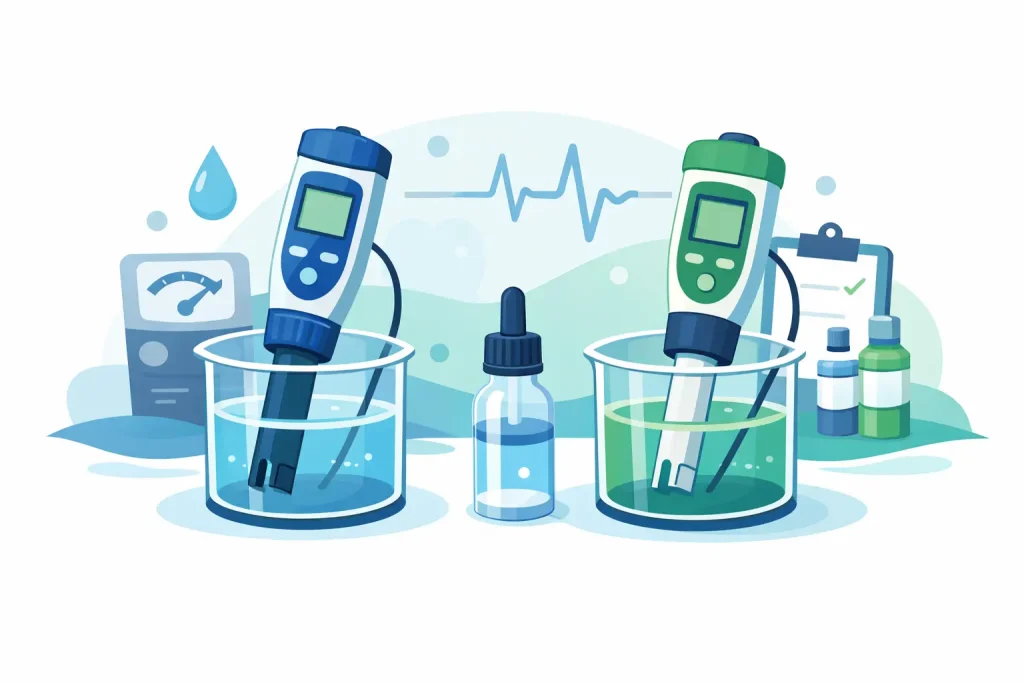
A reservoir can look perfect on paper and still cause trouble if your readings are off. That is why EC and pH meter calibration matters more than most growers give it credit for. If your pen says 1.8 EC when the solution is actually 2.2, or shows pH 5.8 when it has drifted well past target, every feed adjustment that follows is based on bad data.
In hydroponics and other controlled growing systems, small errors stack up quickly. Nutrient strength, uptake rate and root-zone stability all depend on accurate measurement. Calibration is not a box-ticking job. It is basic maintenance for the instruments you rely on to make feeding decisions.
Why EC and pH meter calibration matters
A meter that has drifted out does not usually fail in an obvious way. It still turns on, gives a reading and looks usable. That is what makes it risky. Growers often assume a poor response from plants means the nutrient line needs changing, the water source is the issue, or the environment is unstable. Sometimes the real problem is much simpler – the meter is lying.
For pH, even a modest error can push nutrient availability in the wrong direction. Iron, calcium, magnesium and phosphorus uptake can all be affected when readings are not where you think they are. In recirculating systems, that problem compounds because the same solution stays in play longer.
For EC, inaccurate readings lead to underfeeding or overfeeding. Underfeed and growth slows, especially in heavy feeders. Overfeed and you can stress roots, build up salts or create osmotic pressure that works against healthy uptake. If you are running coco, DWC, flood-and-drain or drip irrigation, precision is part of the workflow.
How often should you calibrate?
There is no single schedule that fits every grow room. It depends on the meter quality, how often you use it, how it is stored and how critical the readings are to your system. A hobby grower checking a hand-watered setup a few times a week can often work on a lighter schedule than someone managing multiple tanks or a recirculating commercial system.
As a practical baseline, pH meters usually need more frequent attention than EC meters. pH probes are more sensitive, more prone to drift and more affected by storage conditions. Weekly calibration is sensible for regular use, and more often if you are taking readings daily. EC pens tend to hold calibration longer, but they still need checking routinely, especially if they are used heavily or exposed to nutrient residue.
A good habit is to calibrate before a new crop cycle, before mixing a fresh feeding programme, and any time a reading looks suspicious. If the number on the display does not match what the plants, the tank or your previous records suggest, stop and verify the meter before changing the feed.
What you need for proper calibration
The process itself is straightforward if you use the right consumables. For pH meters, that usually means fresh buffer solutions, commonly pH 4.0, 7.0 and sometimes 10.0 depending on the meter and application. For most hydroponic work, two-point calibration with 7.0 and 4.0 is the standard approach because you are measuring in the acidic range.
For EC meters, you need the correct conductivity standard recommended by the manufacturer. Different brands use different reference points, so it is worth checking the manual rather than guessing. Using the wrong solution will give you a technically calibrated meter with the wrong baseline, which is no use at all.
You also need clean sample pots, deionised or distilled water for rinsing if specified by the manufacturer, and proper storage solution for pH probes. Plain tap water is not ideal for storage, and letting a pH probe dry out shortens its life and can ruin performance.
Calibrating a pH meter properly
Start with a clean probe. If there is nutrient film, salt residue or organic build-up on the sensor, calibration will be inconsistent. Rinse gently and clean according to the meter manufacturer’s instructions. Some probes need dedicated cleaning solution if they have been used in nutrient-rich reservoirs for long periods.
Use fresh buffer solution in separate containers rather than dipping into the bottle. Contaminated buffer is one of the most common reasons calibration goes wrong. If you pour a small amount, use it once and discard it, your results will be more reliable.
Most growers should calibrate pH 7.0 first, then pH 4.0. Allow the reading to settle fully before confirming each point. Rushing this stage is pointless. A probe that has not stabilised can appear close enough, but close enough is not the same as accurate.
After calibration, rinse again and test the meter in a fresh portion of buffer to confirm it is reading correctly. That extra check only takes a minute and saves a lot of second-guessing later.
Calibrating an EC meter without introducing error
EC meter calibration is generally less fiddly, but the same principles apply. Clean the probe, use fresh standard solution and let the reading stabilise before adjustment or confirmation. If your meter offers automatic calibration, do not assume that means foolproof. Dirty probes and old solution still cause bad results.
Temperature matters as well. Many modern EC meters have automatic temperature compensation, but not all perform equally well, especially at the cheaper end. If the calibration solution is much colder or warmer than the environment where you mix feed, that can affect consistency. Keeping your standards and meter at room temperature is the safer approach.
Once calibrated, check the meter against the standard again. If it struggles to settle, reads inconsistently or needs frequent recalibration, the probe may be ageing or contaminated.
Common mistakes that ruin accuracy
Most calibration problems are not caused by the meter itself. They come from poor handling. Old buffer and standard solutions are a major one. Once opened, they do not last forever, and contamination from repeated dipping makes them less trustworthy over time.
Bad storage is another. pH probes should be kept hydrated with the correct storage solution. Leaving them dry on a shelf or rinsing and capping them without proper storage fluid shortens probe life and increases drift. EC probes are generally less delicate, but they still need cleaning and sensible handling.
There is also the issue of chasing numbers too aggressively. If a reservoir pH is moving naturally across an acceptable range, that is different from a meter reading being wrong. Calibration helps you trust the instrument, but it does not replace judgement. The target range for your crop, substrate and system still matters.
When calibration is not enough
Sometimes a meter will not hold calibration no matter what you do. That usually points to probe wear, damage or neglect. pH probes are consumable parts. They do not last indefinitely, especially in busy grow rooms where they are used often and exposed to concentrated nutrients, additives and temperature swings.
Warning signs include slow response, unstable readings, failure to calibrate at one or both points, or obvious mismatch between readings and known solution values. If you are recalibrating constantly just to keep the meter usable, replacement is usually the better option.
This is where buying a decent meter pays off. Better instruments tend to offer improved stability, replaceable probes and more dependable calibration performance over time. For growers running serious feeding schedules, that reliability is worth more than the small saving on a budget pen that drifts all season.
Build calibration into your routine
The easiest way to stay accurate is to make calibration part of the normal maintenance schedule rather than a rescue job after problems appear. Keep fresh calibration fluids on hand, store the meters correctly and check them before key feed changes. If multiple people are working in the same room, label solutions clearly and keep the process consistent.
It also helps to record readings. If your reservoir usually sits at a certain EC after mixing and suddenly looks far off, that history gives you a reference point. Good growers do not rely on memory alone. They track patterns, spot drift early and deal with it before plant performance drops.
For anyone running hydroponics seriously, EC and pH meter calibration is not extra admin. It is part of keeping the nutrient programme honest. The better your readings, the better your decisions. And when the crop depends on those decisions every day, accuracy is one of the cheapest wins in the room.
If your meters have been ignored for a while, sort them before the next tank mix rather than after the next problem.






