
A container can change the way a crop drinks, feeds and fills its root zone long before you see a difference above the canopy. In the air pots vs fabric pots decision, both options aim to prevent circling roots, but they behave very differently once they are sitting under lights with fans running and a regular irrigation schedule.
For growers moving beyond standard plastic nursery pots, the right choice usually comes down to medium, hand-watering versus automated irrigation, available floor space and how often the crop needs moving. Neither container is automatically the higher-yield option. The better pot is the one that keeps the root zone in the correct moisture range without adding unnecessary work.
Air pots vs fabric pots: the core difference
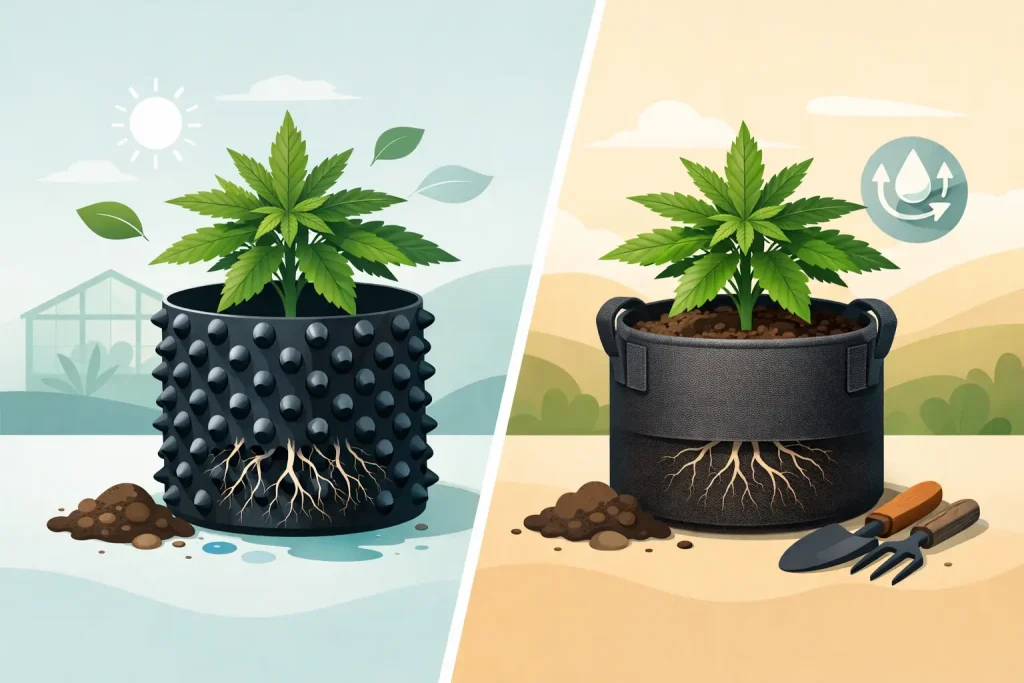
Air pots are rigid, modular containers made from shaped plastic sidewalls. Their outward-facing cones and openings direct roots towards air at the edge of the pot. When a root tip reaches that dry, exposed point, it stops extending and branches behind the tip. This is known as air pruning.
Fabric pots use a breathable textile wall. Roots growing towards the edge meet air through the fabric and are similarly pruned, encouraging a denser fibrous root system rather than a mass of circling roots. The principle is similar, but the container wall, drying pattern and day-to-day handling are not.
An air pot holds its shape, has a defined footprint and usually provides more open exposure around the sidewall. A fabric pot is flexible, lighter when empty and breathes across the full surface. That difference affects irrigation far more than most product descriptions suggest.
Root development and plant performance
A conventional smooth-sided pot can encourage roots to travel around its wall. In a short vegetative cycle this may not cause a major issue, but large plants, longer crop times and heavily rooted cultivars can become restricted by a circling root mass. Both air pots and fabric pots are designed to reduce that risk.
Air pots are particularly effective at directing root growth through their cone structure. They can produce a highly branched root zone when the medium is correctly irrigated. Their rigid sides also make it easier to inspect the container, reposition plants and maintain even spacing in a tent or grow room.
Fabric pots create an even root-pruning boundary around the entire pot. They are widely used with soil, coco coir and living soil mixes because they allow oxygen exchange through the wall and help avoid saturated edges. A healthy root system can improve nutrient uptake and recovery after transplanting, but it does not compensate for poor EC, incorrect pH, root-zone temperature or overwatering.
For most indoor crops, pot volume remains more important than the container type. A plant given insufficient root volume will still become restricted in an air pot or fabric pot. Choose the volume around crop size, veg time and irrigation frequency first, then select the container format.
Watering: where the real trade-off sits
Breathable pots lose moisture from the sides as well as the top. This is useful when a grower tends to overwater, or when using a dense soil blend that holds water for too long. It also means the medium can dry faster under high-intensity lighting, warm room temperatures and strong air movement.
Fabric pots typically dry from the outer wall inward. In coco, that can mean more frequent feeds than the same volume in a plastic pot. Hand-watered plants may need attention every day during heavy growth, particularly in smaller containers. The fabric can also wick moisture onto a tray, so good run-off management matters.
Air pots also dry faster than sealed plastic pots, especially through the numerous openings in the sidewall. Their shape gives the root zone plenty of air, but this can expose growers with infrequent watering routines. A large air pot filled with a light, airy coco mix and positioned directly in a fan path can dry unevenly or too quickly.
With either style, do not respond to every dry top layer with more feed. Check pot weight, inspect the moisture lower in the root zone where practical, and watch how quickly plants are drinking. A consistent wet-to-dry cycle is more useful than following a fixed number of days between waterings.
Hand watering and run-to-waste
Fabric pots suit hand watering well when you can maintain a regular routine. Water slowly enough for the medium to absorb evenly, and use a saucer or tray that can handle run-off. If you are feeding coco, measure input and run-off EC periodically so salts do not build up unnoticed.
Air pots are also suitable for hand watering, though their side openings can make a rushed, high-volume pour messier. Apply solution steadily at the surface rather than flooding the pot. Fine media can occasionally escape through openings during filling or early watering, so use a suitable grade of coco, soil or amended mix.
Automated irrigation
For dripper-fed coco systems, both containers can work well. Fabric pots are simple to place on trays or purpose-built drainage tables, while air pots provide a stable structure for dripper stakes and manifolds. The deciding factor is usually how many irrigations your environment demands.
A dry, warm grow room may require multiple short feeds to keep coco in range. In that situation, automated irrigation, drainage control and a correctly sized reservoir matter more than whether the container is fabric or plastic. Avoid placing either type directly on a cold floor. Pot risers or drainage trays improve air movement below the base and keep run-off from being reabsorbed.
Best media for each pot type
Fabric pots are a natural fit for soil and organic mixes. The porous wall helps the medium dry more evenly and can reduce the likelihood of constantly wet lower edges. They are also popular for coco, provided irrigation is frequent enough to avoid large swings in moisture and EC.
Air pots work with soil, coco and soilless blends, but their extra ventilation often favours growers who want a highly aerated root zone. They can be a strong option for larger plants in coco or mixed media, particularly where the grower has reliable access to water and enough drainage capacity.
Neither option is a replacement for proper medium preparation. A compacted soil mix will still drain poorly. Coco that has not been properly buffered can still create calcium and magnesium issues. If your medium is already very open and fast draining, use a larger pot or plan for closer irrigation intervals rather than assuming more airflow is always beneficial.
Handling, cleaning and reuse
Air pots are rigid and generally easier to move once filled. Their modular panels can be dismantled after a crop, cleaned and reused for multiple cycles. This suits growers running repeatable room layouts who want containers that retain a precise shape.
Fabric pots are easier to store because they fold flat, and they are usually quicker to carry before filling. Once wet and fully rooted, however, lifting them by the handles can stress the fabric or root ball, especially with larger volumes. Support the base when moving a heavy plant.
Fabric pots can be reused, but they need proper cleaning between crops. Residual salts, algae and root matter can remain in the material. Wash them thoroughly, rinse well and dry them completely before storage. If the fabric is thinning, the handles are damaged or drainage has become poor, replacement is the sensible route.
Air pots can collect dried nutrient residue around their cones and openings, so they also need a proper wash. Their many sections take longer to clean than a simple fabric pot, but they are less likely to lose shape over repeated use.
Which should you choose?
Choose fabric pots if you want a straightforward, breathable container for soil or coco, have limited storage space, and do not mind a little more attention to watering as plants mature. They are especially practical for growers using trays, hand watering smaller numbers of plants, or running organic media.
Choose air pots if you prefer a rigid container, want strong root-zone aeration and need pots that are easier to position or move around a structured grow-room layout. They make most sense where regular irrigation is already part of the workflow and rapid drying will not catch you out.
For a first setup, avoid buying on root-pruning claims alone. Match the pot to the medium, plant size and irrigation method you can reliably maintain. A correctly sized container with stable moisture, clean run-off and a healthy feed schedule will do more for the crop than chasing a container trend.






