
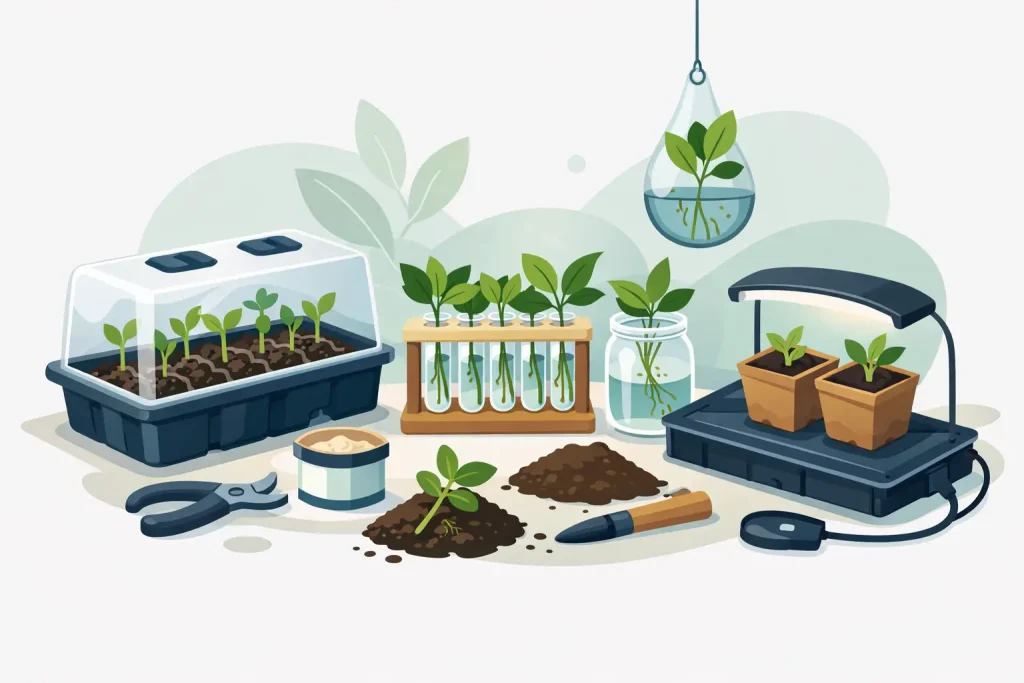
A bad propagation setup wastes time before the grow has properly started. Weak rooting, stalled cuttings, damped-off stems and uneven tray performance usually come back to the kit, not the genetics. If you are comparing the best propagation kits for cuttings, the right choice depends less on branding and more on how you manage heat, humidity, media and throughput.
For most growers, a propagation kit is not just a tray with a lid. It is the first controlled environment in the crop cycle. Get that environment stable and cuttings root faster, transplant more evenly and carry less stress into veg. Get it wrong and you spend the next two weeks compensating.
What makes the best propagation kits for cuttings?
The best kits do three jobs well. They hold consistent humidity around fresh cuttings, maintain an appropriate root-zone temperature, and make daily handling straightforward. That sounds simple, but there is a big difference between a basic windowsill propagator and a propagation setup that can support repeatable results in an indoor grow room.
Lid height matters because taller domes give soft material enough headroom without pressing leaves against wet plastic. Vent control matters because fully sealed lids often create more condensation than the cuttings need, while uncontrolled airflow can dry stems before roots form. Tray rigidity matters too. Flexible, thin bases are fine for occasional use, but they become awkward when you are moving multiple loaded trays around a tent or propagation shelf.
The heating side is where many kits separate. Ambient room temperature is rarely as stable as growers think, especially in garages, loft spaces or outbuildings. A heated propagator, or a tray paired with a heat mat and thermostat, gives far better consistency than trying to root cuttings in a cold room and hoping the dome will compensate.
The main types of propagation kit
Basic tray and dome kits
These are the entry-level option and still useful when your room conditions are already dialled in. A standard seed tray with a clear vented lid is cheap, simple and easy to stack into a larger workflow. If your propagation area sits at the right temperature and you only need a small number of cuttings at a time, this type of kit can be enough.
The trade-off is control. Most basic kits do not actively heat the root zone, and cheaper lids can bead with condensation heavily. That raises humidity fast, but it can also reduce airflow and encourage rot if you are over-misting.
Heated propagator kits
For many indoor growers, this is the most practical upgrade. Heated propagators combine tray, lid and built-in warmth, helping maintain a more stable environment during the rooting phase. They are especially useful in cooler UK conditions where room temperatures fluctuate between day and night.
Not all heated units are equal. Some are simple low-wattage bases that add gentle warmth but no precise control. Others pair better with external thermostatic management. If you already run an organised propagation area, the best option is often a setup that lets you measure and adjust rather than guess.
Heat mat and tray combinations
This is often the most flexible route for growers who want to scale. A separate heat mat under a quality tray and dome lets you replace individual components, choose your tray size, and integrate a thermostat if needed. It is also easier to expand – add another mat, another tray, another dome – without replacing the whole system.
The downside is that it is less tidy as an all-in-one solution. More components mean more cable management and more room for setup error. Still, for growers moving beyond hobby numbers, modular usually makes more sense.
Aeroponic and hydro cloning kits
If you want faster rooting and cleaner transplanting, cloners deserve serious consideration. Instead of rooting into plugs or cubes first, cuttings sit in collars while stems are misted or sprayed with oxygen-rich water. This can shorten rooting time and reduce media handling.
They are not automatically better for everyone. Cloners introduce pumps, sprayers, cleaning requirements and water temperature considerations. If hygiene slips, problems spread quickly across the whole unit. They suit growers who want speed and repeatability and are prepared to maintain the system properly.
10 best propagation kits for cuttings by use case
1. Small vented dome kits for low-volume cloning
If you take a handful of cuttings at a time, a compact tray and vented lid is still a sensible buy. Look for a firm base, clear dome and vents that open gradually rather than snapping from shut to fully open. These kits suit hobby growers with a stable indoor environment.
2. Large standard propagator kits for routine batches
A larger tray format is the next step when you need consistency across more plants. The best versions accept common plug trays and rooting media without wasted space. This keeps bench space efficient and transplanting quicker.
3. Heated propagators for cool grow rooms
If your propagation area drops below ideal temperatures, a heated unit earns its place quickly. It reduces the lag that often causes cuttings to sit without pushing roots. For many growers, this is the best balance between simplicity and improved performance.
4. Thermostat-ready heat mat kits
These are stronger than basic heated trays when precision matters. Pairing a mat with a thermostat helps prevent overheating, which is just as damaging as being too cold. This is a better route for growers who monitor environmental conditions closely.
5. Propagation kits with tall domes
Some cuttings simply need more vertical clearance, especially if you are working with broader-leafed stock or slightly longer tips. A taller lid reduces contact with condensation and lowers the chance of physical damage during the first few days.
6. Plug-based propagation kits
Kits designed around rooting plugs are efficient because they streamline transplanting. Once rooted, plugs move neatly into pots, slabs or hydro systems with minimal disturbance. They are a strong option if your workflow depends on speed and uniformity.
7. Rockwool-compatible kits
For hydroponic growers, rockwool remains a standard choice. The best kits for this setup fit cube trays properly, hold moisture without pooling beneath the cubes, and give enough airflow to avoid soggy conditions. Good tray drainage matters more here than many buyers expect.
8. Modular tray and dome systems for scale
If you regularly propagate in batches, modularity pays off. Matching trays, inserts, domes and mats make replacements easier and bench layouts more efficient. This kind of system is often better value long term than repeatedly buying mixed low-cost kits.
9. Aeroponic cloners for rapid rooting
For growers chasing speed and clean root development, a well-built cloner is hard to ignore. Root inspection is easier, transplanting is cleaner, and there is no saturated media to manage. Just be realistic about maintenance – pumps, collars and spray manifolds need regular cleaning.
10. Full propagation starter kits with tray, dome, media and heat
These all-in-one kits are useful for newer growers or anyone setting up a secondary propagation area quickly. They remove the guesswork from compatibility. The only caution is that some bundled kits include lower-grade components to hit a price point, so component quality still matters.
How to choose the right kit for your setup
The right answer comes down to volume, room conditions and how standardised you want the process to be. If you only root occasional cuttings in a warm tent, a simple dome kit may be enough. If you are producing repeat batches and need dependable turnaround, heated or modular systems make more sense.
Media choice affects the decision as well. Rooting plugs are forgiving and easy to transplant. Rockwool suits hydro workflows but needs tighter moisture control. Bare-stem cloners can be faster, but only if cleaning discipline is good. The best propagation kits for cuttings are the ones that fit your actual propagation method, not just the ones with the most parts in the box.
Space is another practical limit. Large dome kits look efficient until you try to fit lighting above them, route cables safely and maintain access for venting, misting and inspection. Measure the shelf or tent area first. Propagation gear should simplify the early stage, not create a cramped work area.
Common buying mistakes
The most common mistake is buying too cheap and then replacing half the setup. Weak lids crack, shallow trays warp and underpowered heated bases struggle in cooler rooms. That usually ends in uneven rooting and duplicate purchases.
The second mistake is chasing humidity while ignoring root-zone temperature. Many growers see drooping cuttings and keep the dome sealed or spray more often, when the actual issue is cold media. High humidity can reduce initial stress, but roots still need the right temperature to develop.
The third is overlooking hygiene. Any propagation kit needs to be easy to clean between runs. Smooth surfaces, removable inserts and accessible corners matter. This is especially true with cloners, where biofilm and residue build up faster than people expect.
What serious growers tend to prioritise
Once growers have lost a few trays, their priorities usually change. They stop shopping by price alone and start looking for consistency, compatibility with their chosen media, and whether the kit fits the wider room workflow. A propagation setup should connect cleanly with the next stage – pots, systems, irrigation and lighting – rather than operate as a separate afterthought.
That is why the best choice is often the one that looks slightly boring on paper. Solid tray, reliable lid, stable heat, easy cleaning, repeatable results. For a specialist retailer such as Hydroponic Centre, that practical approach is usually what separates equipment that gets used for years from equipment that ends up on a shelf.
Choose the kit that makes your first 10 days predictable, because the rest of the crop gets easier when propagation stops being the weak point.






