
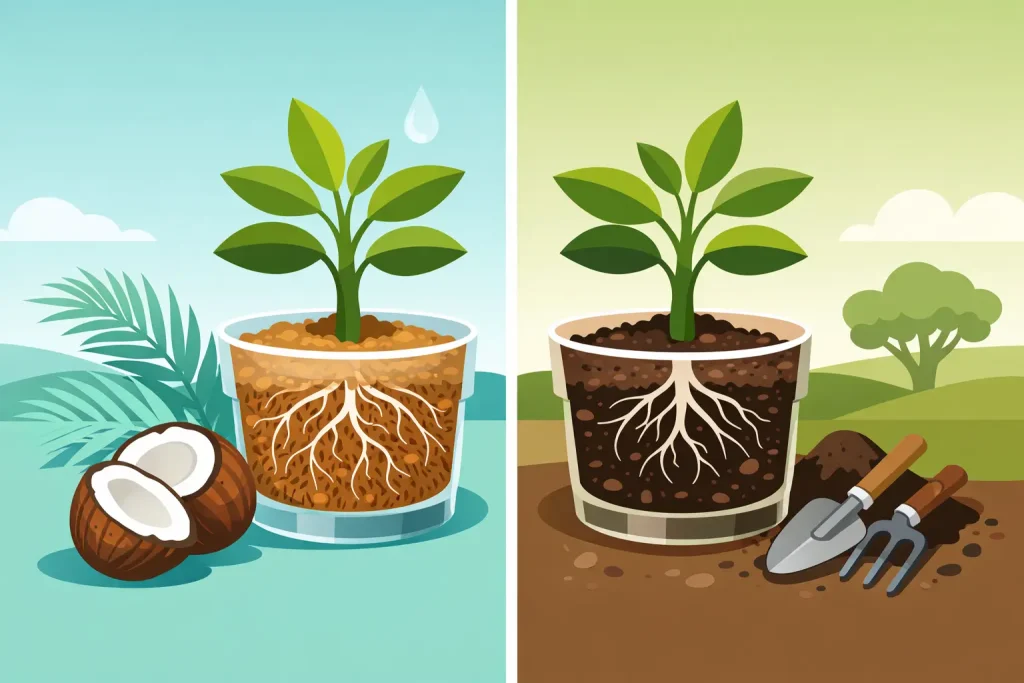
If your feed chart is dialled in but your root zone is fighting you, the coco vs soil growing decision stops being theoretical very quickly. Media choice affects irrigation frequency, nutrient uptake, dry-back, pH behaviour and how much room you have for mistakes. For indoor growers, that means one thing: the medium changes the whole workflow.
There is no universal winner here. Coco coir gives you more control and usually faster growth, but it expects tighter management. Soil is more forgiving and often simpler to run, but it is less precise and typically slower to correct when something goes wrong. The right option depends on how you feed, how often you can check the room, and whether you want buffer or responsiveness.
Coco vs soil growing: the core difference
The simplest way to frame coco vs soil growing is this: coco is a hydroponic-style medium, while soil is a buffered growing medium with nutrient content and biological activity built in. That difference shapes everything from feeding frequency to runoff management.
Coco holds air well, drains quickly and performs best when you feed little and often with a complete nutrient line designed for coco. Because it contains very little plant food on its own, the plant responds directly to what you supply. That is useful if you want tighter control over EC, pH and overall growth rate.
Soil works differently. A quality potting mix contains organic matter, amendments and a degree of nutrient charge, so the plant is not relying on every irrigation event for nutrition. The medium buffers more aggressively, which softens errors but also slows response time. If a plant is underfed or overwatered in soil, the fix can take longer to show.
Growth speed and plant response
In most controlled indoor environments, coco produces quicker vegetative growth than soil. Roots receive strong oxygenation, and nutrients are available in a more immediate form. If your lighting, extraction, temperature and irrigation are already in order, coco can push plants harder and shorten recovery time after topping, training or transplanting.
That speed comes with a condition: the environment has to be reasonably stable. A warm room, weak airflow or inconsistent hand-watering schedule will show up faster in coco than in soil. Plants can look excellent when the programme is tight, then slip quickly if feeds are missed or the EC drifts.
Soil generally grows at a steadier pace. For growers who are not chasing maximum turnover, that can be an advantage rather than a drawback. You get a broader margin for error, especially during early veg, and less day-to-day volatility in the root zone. If your main goal is a simpler run with fewer moving parts, slower can be more efficient overall.
Feeding in coco vs soil growing
Feeding is where the two media separate most clearly.
In coco, you normally feed from early on and continue feeding regularly through the cycle. Coco-specific nutrients matter because coir interacts with calcium and magnesium differently from soil. A proper coco feed line accounts for that, and many growers also keep a Cal-Mag product in the programme depending on water quality, cultivar response and lighting intensity. pH control is also tighter. If you are not monitoring input and runoff with reasonable consistency, coco can become harder work than expected.
In soil, the feeding schedule is usually lighter at the start. A well-amended mix may carry young plants for a period before additional nutrients are needed. That reduces setup complexity, but it also introduces variability because different soil blends behave differently. One bagged mix may be hot enough to hold plants for weeks, while another wants feeding much sooner. Soil can also mask imbalance for a while before symptoms show.
This is why experienced growers often prefer coco when consistency matters. Once you know your nutrient line, irrigation volume and runoff target, the medium behaves predictably. Soil is less exact. It can work extremely well, but the medium itself plays a larger role in the outcome.
Watering frequency and labour
If you hand-water, be realistic about your schedule before choosing.
Coco likes regular irrigation. In smaller pots under strong lighting, that may mean daily watering, and in more developed systems it can mean multiple feeds per day. Run-to-waste setups, drippers, pumps, timers and irrigation components make coco much easier to scale, but they add equipment and process. For growers already running a structured indoor room, that usually makes sense. For growers who want to water every few days and leave the room alone, it often does not.
Soil is lower frequency. Pots stay wet longer, which suits hand-watered tents and less intensive routines. That said, lower frequency does not mean easier technique. Overwatering in soil is common because growers water by habit rather than by pot weight and media dryness. Soil forgives underfeeding better than coco, but it does not forgive poor wet-dry cycles as much as people think.
Yield potential and quality
Coco is often chosen for yield. Given the same genetics, lighting and environment, it usually offers stronger growth rates and better steering potential than soil. That can translate into heavier output, especially in rooms where irrigation, climate and nutrition are already under control.
Soil still has a place, particularly for growers prioritising simplicity, flavour expression or a more traditional style of cultivation. There is plenty of debate around final quality, and broad claims are rarely useful. In practice, plant health, dry-back control, root-zone oxygen, nutrient balance, harvest timing and post-harvest handling matter more than media loyalty. A badly managed coco crop will not outperform a well-run soil crop just because coco is technically faster.
Cost, equipment and setup decisions
Coco usually asks for more from the setup. You will need a complete nutrient line, pH control, EC monitoring if you want to run it properly, and enough saucers, trays or runoff management to keep the room clean. If you want coco to be efficient rather than labour-heavy, irrigation hardware becomes part of the plan sooner rather than later.
Soil can reduce the amount of monitoring gear needed at the beginning, particularly for newer growers. You may not need to feed as early, and the buffer in the medium takes some pressure off. The trade-off is that bagged soil can be bulky, messy and inconsistent between batches or brands. In a tight indoor space, carrying heavy compost-based mixes around the room is not always convenient.
For many growers, the real cost question is not just media price. It is time, consumables and the cost of mistakes. Coco can be cheaper than repeated problem-solving if you already run pumps, drippers and proper nutrient management. Soil can be cheaper if you are hand-watering a modest tent and want fewer variables to chase.
Who should choose coco?
Coco suits growers who want direct control and are comfortable managing inputs. If you already monitor pH and EC, understand runoff, and do not mind a more active feeding schedule, coco makes sense. It also suits growers building around irrigation systems, whether that is a simple dripper setup or a more developed run-to-waste layout.
It is especially effective in rooms where the rest of the kit is already doing its job. Strong lighting, reliable extraction, stable temperatures and decent environmental control allow coco to show its strengths quickly.
Who should choose soil?
Soil suits growers who want a wider margin for error and a less intensive routine. If you are hand-watering, running fewer plants, or simply prefer a more buffered medium, soil is often the easier starting point. It also works well for growers who do not want every irrigation event tied closely to nutrient management.
That does not make soil basic. A good soil run still depends on sensible pot sizing, proper drainage, balanced feed input and stable climate. It is just less demanding minute to minute.
A practical way to decide
If your priority is control, faster growth and higher steering potential, choose coco and commit to managing it properly. If your priority is simplicity, lower watering frequency and more buffer against small mistakes, choose soil.
If you are in between, look at your actual routine rather than your ideal one. The best medium is the one that matches how often you can water, how closely you can monitor the room, and how much equipment you are prepared to use. Hydroponic Centre stocks both routes because both work when the setup matches the grower.
Choose the medium that fits your process, not the one that sounds best on paper. A grow room runs better when the root zone, feed programme and daily workload all pull in the same direction.






