
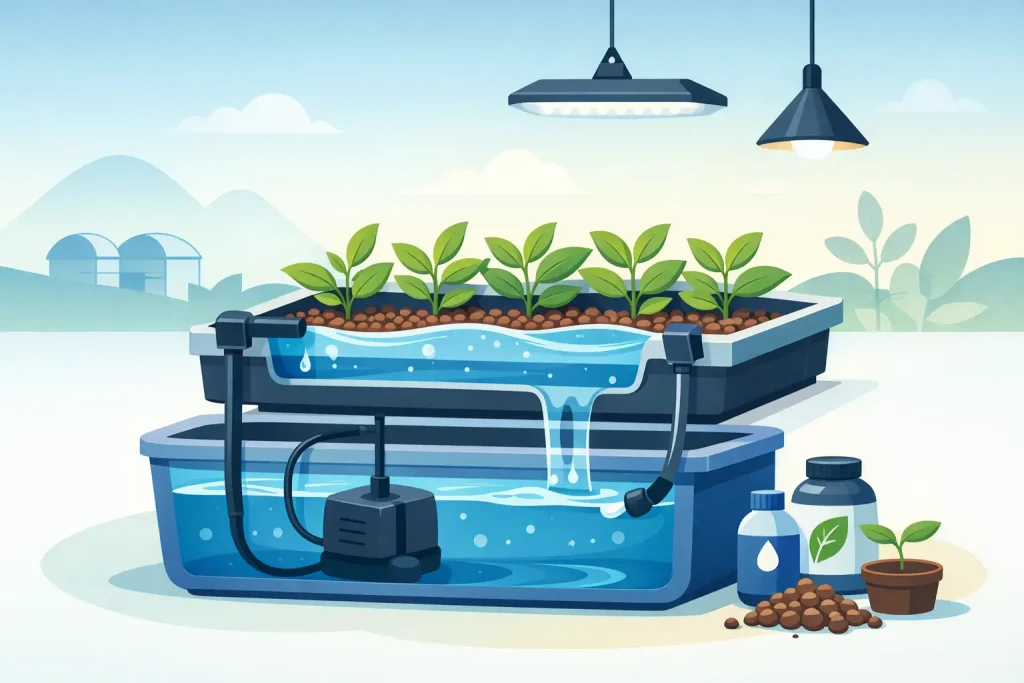
A flood table that fills too high, drains too slowly, or cycles at the wrong time will show up in plant performance quickly. That is why a proper flood and drain system guide matters. This setup is simple in principle, but the details – tray height, media, pump sizing, root mass and irrigation timing – decide whether it runs cleanly or becomes a constant maintenance job.
For indoor growers, flood and drain remains one of the more practical recirculating methods because it scales well, suits a wide range of plant sizes, and gives you direct control over feed frequency. It is also forgiving compared with some higher-speed hydro methods, provided the basic components are matched properly. If you are building a new system or tightening up an existing one, getting the workflow right at the start saves time, nutrient waste and crop inconsistency later.
What a flood and drain system actually does
A flood and drain system, also called ebb and flow, works by pumping nutrient solution from a reservoir into a tray or module holding the plants. The solution rises through the growing media, wets the root zone, then drains back into the tank once the pump stops or the standpipe level is reached. That cycle repeats on a timer.
The advantage is straightforward. Roots get regular access to nutrient solution during the flood period, then pull in oxygen as the media drains down. You are not keeping the root zone permanently saturated, which is one reason these systems can produce strong growth when timed correctly. At the same time, you are recirculating feed rather than sending it to waste, so nutrient use is generally efficient.
Where growers go wrong is assuming the tray floods, so the job is done. In practice, media type, pot size, plant size and room conditions all affect how often you should irrigate. A tray full of small plants in clay pebbles behaves very differently from larger plants in coco-heavy mixes.
Flood and drain system guide to core components
Every system comes down to the same working parts. You need a tray or growing module, a nutrient reservoir, a pump, fittings for fill and drain, and a timer to control flood intervals. Beyond that, the quality of the setup depends on the matching of those parts rather than the parts alone.
The tray needs enough volume and drainage area to flood evenly and empty without leaving stagnant pockets. The reservoir has to hold enough working solution to keep EC and pH reasonably stable between top-ups. If the tank is too small, nutrient concentration drifts quickly, especially in warm rooms or under high transpiration.
Pump choice matters more than many first-time growers expect. An undersized pump leads to slow fill times and uneven flooding. An oversized pump can be managed, but it may create unnecessary turbulence, heat and wear if the rest of the plumbing is not matched to it. In most cases, the right target is fast, even tray fill without excessive agitation.
The fittings also deserve attention. A proper fill fitting and overflow or standpipe arrangement protects you against overflooding and keeps flood height consistent. Cheap or poorly seated fittings are one of the most common causes of leaks in flood tables.
Choosing the right media
Media choice shapes how the whole system behaves. If you want frequent cycles and fast dry-back, clay pebbles are the usual option. They drain quickly, hold decent air, and make flood timing easier to adjust. They also suit growers who want a cleaner hydroponic style setup with minimal water retention.
If you use coco blends or heavier media, the system becomes less responsive. That is not automatically bad. Larger plants in warm rooms may benefit from a bit more moisture retention, and some growers prefer the buffer. The trade-off is slower dry-back and a narrower margin for overwatering. In a flood and drain setup, that means fewer cycles and closer observation of root-zone conditions.
Rockwool blocks can work well too, particularly where uniformity matters, but they need disciplined irrigation timing. Too frequent flooding can leave them holding more moisture than intended. Too little can create dry edges and uneven feed distribution.
There is no universal best option. For most growers who want predictable operation, clay pebbles remain the cleanest starting point.
Setting up flood height and cycle timing
A useful flood and drain system guide has to deal with timing, because this is where performance is won or lost. The tray should usually flood high enough to wet most of the root zone, but not so high that the base of every pot stays constantly soaked. A common starting point is flooding to just below the top of the media line in the pot, allowing capillary action to finish the job.
Flood duration is often shorter than new growers assume. Once the tray reaches the target height, you usually only need enough time for the media to absorb solution evenly. Leaving the tray flooded for much longer does not automatically improve uptake. It can simply keep the root zone wetter than necessary.
Cycle frequency depends on plant demand. Early-stage plants with small root systems need less frequent flooding. As root mass increases and canopy demand rises, especially under strong lighting, cycles usually need to increase. Room temperature, humidity and airflow all influence this. In cooler rooms with lower transpiration, the same schedule may be excessive.
The best approach is to set a conservative starting schedule and adjust based on plant response, pot weight and media moisture. Wilt between floods means demand is outrunning supply. Persistently heavy, cold pots suggest too much irrigation.
Nutrient management in recirculating systems
Because flood and drain recirculates nutrient solution, reservoir management needs more attention than in run-to-waste systems. Plants do not absorb every element at the same rate. Over time, that means the solution composition can drift away from what you originally mixed, even if EC looks acceptable.
For that reason, regular top-ups with correctly adjusted water are standard practice, along with periodic full reservoir changes. How often you change out depends on tank size, plant load and how stable your readings remain. A lightly stocked system with a large reservoir is more forgiving than a packed tray drawing hard every day.
Keep an eye on pH trends as well as EC. A system that needs constant correction is telling you something, often about nutrient uptake imbalance, water quality, reservoir temperature or root health. Warm nutrient solution can quickly reduce dissolved oxygen and encourage root-zone issues, particularly in heavily stocked systems.
Good hygiene matters here. Dead roots, spilled media, and light entering the reservoir all add avoidable problems. A tidy tank and lightproof plumbing make troubleshooting much easier.
Common problems and what usually causes them
Uneven growth across the tray often comes back to poor flooding consistency. One side may be receiving solution faster, or the tray may not be level. In other cases, root mass near the drain point restricts return flow and changes how the tray fills.
Slow drainage is another common issue. That can be caused by blocked fittings, root intrusion, media debris or undersized drainage hardware. If the tray empties too slowly, the root zone stays wet too long and oxygen exchange suffers.
Salt build-up on pots or media usually points to feed concentration, evaporation, or insufficient refresh of the reservoir. Algae growth tends to mean light is reaching wet surfaces. Root stress can come from over-irrigation, high reservoir temperatures, poor oxygenation or simply running the same solution too long.
The practical fix is to isolate variables. Check tray level, flood height, fill time, drain time, reservoir temperature, EC and pH before changing everything at once. Flood and drain systems are relatively simple, which makes them easier to diagnose if you stay methodical.
Is flood and drain right for your room?
For many indoor growers, yes – but it depends on how you work. If you want a system that can handle multiple plant sites, recirculate feed efficiently and scale from hobby use to more serious rooms, flood and drain is a strong option. It is especially useful for growers who want more control than hand-watering without moving into technically fussier systems.
That said, it is not maintenance-free. Reservoir checks, line cleaning and timer management are part of the job. If you prefer a less hands-on feed regime, run-to-waste may suit you better. If maximum oxygenation is the priority and you are happy to manage tighter tolerances, DWC or aeroponic setups may appeal more.
For most growers, flood and drain sits in a practical middle ground. It is fast to work with, flexible on plant count, and compatible with a wide range of pumps, trays, tanks, fittings and media options. That is why it remains a staple category in serious hydroponic rooms.
If you are buying parts rather than a complete kit, match the system as a whole rather than choosing components in isolation. Tray size, tank capacity, pump output, fitting diameter and media all need to support the same irrigation strategy. Get that right, and flood and drain is one of the more reliable ways to keep a room moving without adding unnecessary complexity.






