
Introduction
The world of modern farming is changing fast. Whether you’re a home gardener hoping to grow herbs on your balcony or a commercial farmer looking to increase yields sustainably, soilless growing systems are now a hot topic.
Two methods stand out from the rest: hydroponics and aquaponics. Both systems ditch soil, save water, and help plants grow faster—but they work in different ways. Understanding the differences will help you choose the system that best fits your needs, budget, and long-term goals.
What Is Hydroponics?
Hydroponics is the practice of growing plants in nutrient-rich water instead of soil. The roots sit in or above water and absorb dissolved nutrients directly. To support the plants, growers often use inert media like clay pebbles, rockwool, or coco coir.
Why it’s popular:
- Faster growth compared to soil
- Works indoors and outdoors
- Easy to scale from a small kit to a commercial greenhouse
- Ideal for herbs, lettuce, strawberries, tomatoes, and peppers
Tools that make hydroponics easier:
- Origin Dripper Kits – perfect for delivering nutrient solutions with precision
- Bluelab Combo Meter – to monitor pH, EC, and temperature with one device
What Is Aquaponics?
Aquaponics combines hydroponics with aquaculture (raising fish). Fish produce waste, which beneficial bacteria convert into nutrients for the plants. In turn, plants filter and clean the water, which cycles back to the fish tank.
Why it’s popular:
- Creates a self-sustaining ecosystem
- Produces both plants and fish
- Uses fewer inputs, as fish waste is the nutrient source
- Appeals to eco-conscious gardeners and sustainable farms
Tools that help in aquaponics:
- FishPlant Production Unit – designed specifically for aquaponic growers
- Hailea Nutrient Chiller – keeps water temperature stable, essential for both plants and fish health
Key Differences Between Hydroponics and Aquaponics
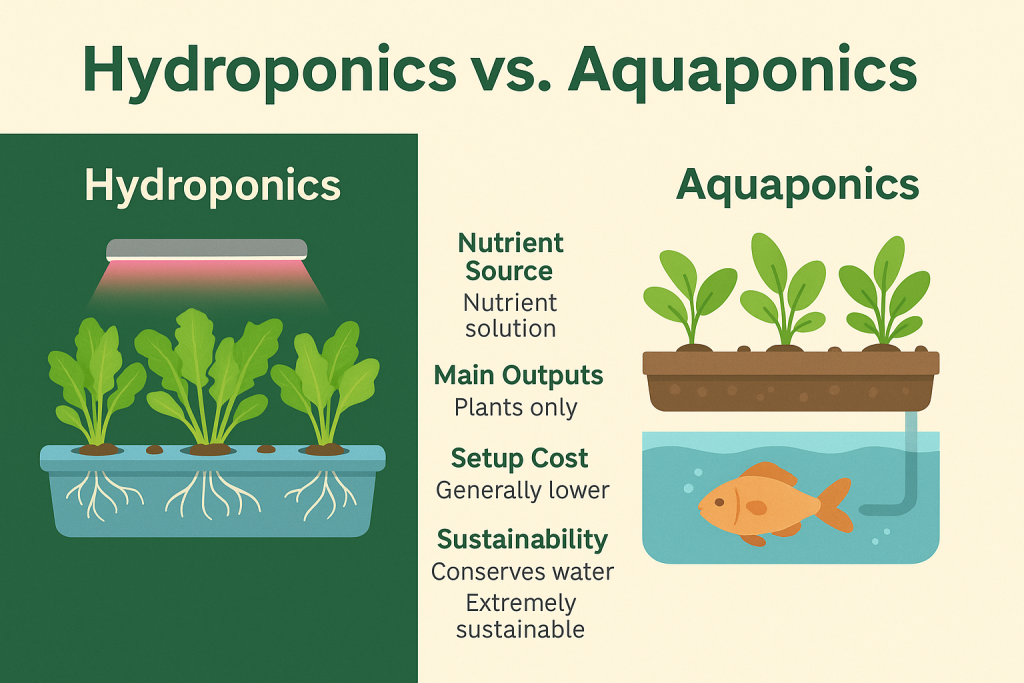
| Feature | Hydroponics | Aquaponics |
|---|---|---|
| Nutrient Source | Nutrient solution (man-made) | Fish waste (natural, organic) |
| Main Outputs | Plants only | Plants + fish |
| Setup Cost | Generally lower | Higher (fish tanks, filters, pumps) |
| Maintenance | Focus on pH, EC, and nutrients | Fish care + water + bacteria balance |
| Sustainability | Conserves water but relies on nutrient purchases | Extremely sustainable, minimal inputs |
| Learning Curve | Easier for beginners | Steeper, requires fish and system knowledge |
Pros and Cons of Hydroponics
Pros:
- Easy to set up and scale
- Consistent results
- Faster plant growth
- Lower system complexity
Cons:
- Relies on nutrient purchases
- No secondary yield (e.g., fish protein)
- Less “organic” appeal compared to aquaponics
Pros and Cons of Aquaponics
Pros:
- Produces both vegetables and fish
- Natural nutrient cycle, no synthetic feed required
- Environmentally sustainable
- Marketable as organic or eco-friendly
Cons:
- Higher setup cost
- Requires more knowledge and care (fish, bacteria, plants)
- More vulnerable to system failures (if fish die, plants suffer)
Which System Is Better for Home Gardeners?
For beginners or small-scale growers, hydroponics is usually the better choice. It’s easier to manage, less expensive, and still produces fantastic results.
However, if you’re passionate about sustainability and like the idea of raising fish, aquaponics is rewarding—especially if you’re willing to learn.
Recommended Home Grow Products:
- Origin Dripper Kits – great starter hydroponic solution
- FishPlant Production Unit – ideal aquaponic system for hobby growers
Which System Is Better for Commercial Farmers?
Hydroponics provides predictability, scalability, and faster ROI. It’s well-suited for high-yield, commercial operations where consistency is key.
Aquaponics shines in niche markets where sustainability, eco-certification, and local “farm-to-table” branding can fetch premium prices. Selling both fresh produce and fish offers additional revenue streams.
Recommended Commercial Solutions:
- Bluelab pH Controller WiFi – automates pH balancing for large systems
- Hailea Nutrient Chillers – essential for keeping large-scale hydroponic or aquaponic systems stable
FAQs
Q: Do hydroponic plants taste different from aquaponic plants?
A: Some growers believe aquaponic plants taste “cleaner” because they’re fed naturally, but in truth, both methods can produce delicious, healthy crops.
Q: Is aquaponics cheaper than hydroponics?
A: Not initially—hydroponics is cheaper to set up. But aquaponics can reduce long-term input costs since fish produce the nutrients.
Q: Which crops are best for hydroponics vs. aquaponics?
A: Both are great for leafy greens, herbs, and some fruits. Hydroponics is excellent for fruiting plants like tomatoes and peppers, while aquaponics excels at lettuce, herbs, and lower-nutrient-demand crops.
10-Year-Old-Friendly Summary
Imagine two magical gardens:
- In hydroponics, plants sit in water with “vitamin juice” mixed in. They drink it up and grow super fast.
- In aquaponics, you keep fish as pets. Their poop turns into plant food (thanks to friendly bacteria), and the plants clean the water so the fish stay happy.
Hydroponics is like feeding plants from a bottle.
Aquaponics is like making fish and plants be best friends.
Conclusion
Hydroponics and aquaponics are both powerful soilless growing methods. Hydroponics gives simplicity, speed, and control—perfect for those starting out or aiming for high yields. Aquaponics offers sustainability and dual production of plants and fish, but it requires more knowledge and care.
Whether you’re a curious home gardener or a forward-thinking commercial farmer, understanding the difference between these two systems will help you choose the one that fits your goals best.



