
Introduction
For thousands of years, soil has been the foundation of farming. But today, hydroponics—growing plants without soil in nutrient-rich water—is changing the way we think about food production.
If you’re a home gardener wondering how to grow tastier herbs indoors, or a commercial farmer trying to maximise yield and reduce costs, the debate between hydroponics and soil is more relevant than ever.
So, which one should you choose? Let’s explore how hydroponics stacks up against traditional soil growing.
What Is Hydroponics?
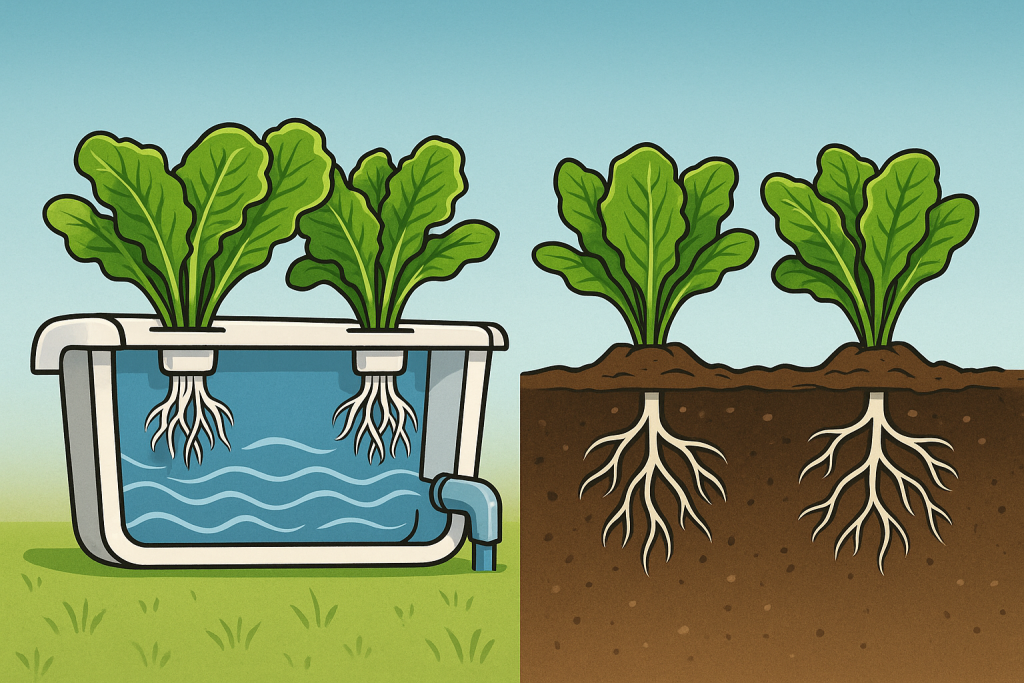
Hydroponics is a soilless growing system where plants receive nutrients through a water-based solution. Roots are either submerged in water or supported by inert media like rockwool, clay pebbles, or coco coir.
Why hydroponics is popular:
- Plants grow 30–50% faster than in soil
- Uses up to 90% less water
- Works year-round, indoors or outdoors
- Reduces pests and soil-borne diseases
Recommended Hydroponic Products
- Origin Dripper Kits – precise nutrient delivery for hobby and pro growers
- Bluelab Combo Meter – measures pH, conductivity, and temperature all in one
- Hailea Nutrient Chiller – keeps nutrient solutions cool and stable
What Is Soil Growing?
Soil farming is the traditional method of planting directly into the ground. Plants absorb nutrients naturally from decomposed organic matter, compost, and microbes.
Why soil growing is popular:
- Lower setup cost (just soil and seeds)
- Feels natural and familiar for gardeners
- Builds soil biodiversity and long-term fertility
- Easier for beginners who prefer low-tech growing
Hydroponics vs Soil: Key Differences
| Feature | Hydroponics | Soil Growing |
|---|---|---|
| Nutrient Delivery | Controlled, nutrient-rich water | Natural breakdown of organic matter |
| Growth Speed | 30–50% faster | Slower, natural pace |
| Water Use | Extremely efficient | High, depends on soil type and weather |
| Space Efficiency | Great for small/urban areas | Needs more land |
| Setup Cost | Higher (equipment, monitoring tools) | Lower (soil + seeds) |
| Pests & Diseases | Lower (no soil pests) | Higher risk of soil-borne problems |
Pros and Cons of Hydroponics
Pros:
- Faster growth and higher yields
- Year-round growing indoors
- Water-saving and eco-friendly
- Less pest pressure
Cons:
- Higher initial setup costs
- Requires monitoring of pH and nutrients
- Relies on technology (pumps, meters, electricity)
Pros and Cons of Soil
Pros:
- Natural and low-cost to start
- Easier for beginners with outdoor space
- Builds soil health and biodiversity
- Requires fewer tools and tech
Cons:
- Slower growth rates
- Dependent on weather and climate
- More pests and soil-borne diseases
- Higher water demand
Which Is Better for Home Gardeners?
For urban gardeners or those with limited space, hydroponics is a great option. You can grow fresh herbs, lettuce, and strawberries indoors—even in winter.
For gardeners with outdoor space and a love of traditional methods, soil still works beautifully, especially if you enjoy composting and building soil health naturally.
Top Home Hydroponic Picks:
Which Is Better for Commercial Farmers?
Hydroponics offers scalability, predictability, and higher yields per square metre, making it ideal for commercial farms targeting urban markets or year-round production.
Soil farming is still valuable for organic certification and traditional farming markets, but it’s less efficient in terms of water and yield per area.
Top Commercial Hydroponic Products:
- Bluelab pH Controller WiFi – automated pH management
- Hailea Nutrient Chiller – essential for stable large-scale systems
FAQs
Q: Do hydroponic plants taste different from soil-grown plants?
A: Taste depends on nutrients, care, and crop variety. Many find hydroponic produce just as tasty—or even fresher—than soil-grown crops.
Q: Is hydroponics organic?
A: Not always. Hydroponics is sustainable, but organic certification often requires soil-based growing.
Q: Which is more eco-friendly: hydroponics or soil?
A: Hydroponics uses less water and space, while soil farming supports biodiversity. Both have eco-benefits in different ways.
10-Year-Old-Friendly Summary
Imagine two gardens:
- In soil gardening, you put seeds in the dirt. The dirt has food, worms, and water for the plants.
- In hydroponics, you skip the dirt. The plants drink a special vitamin water instead, so they grow super fast.
Soil is simple and natural, hydroponics is fast and modern—both can grow yummy food!
Conclusion
Hydroponics and soil each have their strengths. Hydroponics offers speed, control, and efficiency, while soil farming provides a natural, traditional, and low-cost approach.
For home gardeners, the choice depends on your space and interest in technology. For commercial farmers, hydroponics provides unmatched scalability and yield.
The future of farming isn’t hydroponics or soil—it’s a mix of both, depending on the grower’s goals.



