
A crop can look well fed at the canopy while its root zone is already drifting out of range. Salt build-up, uneven moisture and rising EC often start below the surface, particularly in coco. Run to waste systems give growers a direct way to reset the root zone with each irrigation cycle, rather than continually returning used nutrient solution to the tank.
How Run to Waste Systems Work
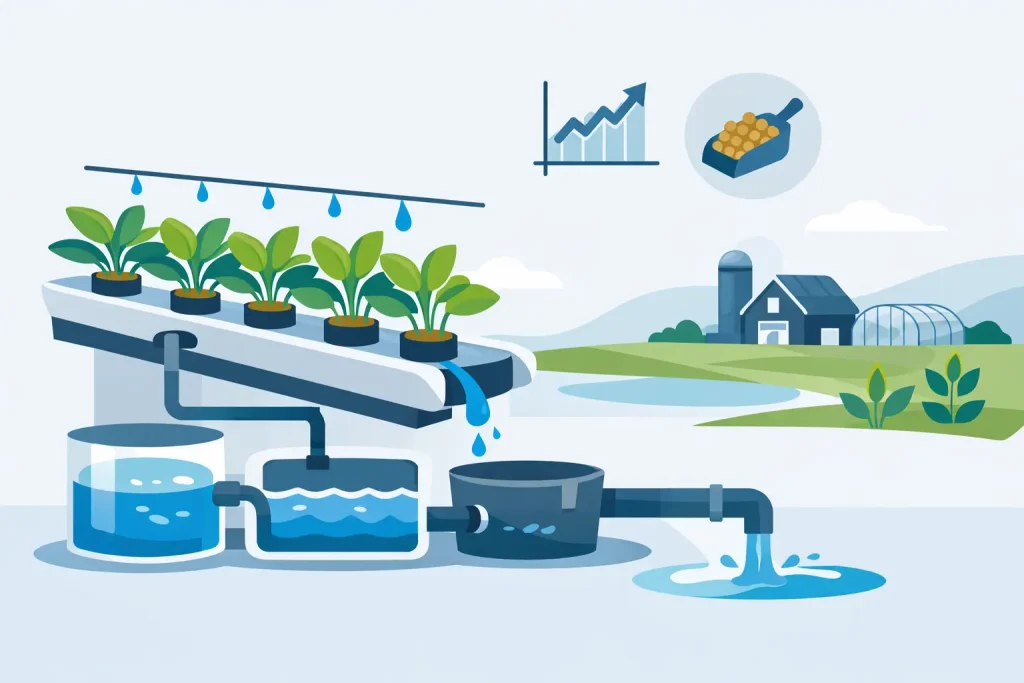
A run to waste setup delivers fresh nutrient solution from a reservoir to each plant, then allows a controlled amount of drainage to leave the container. That drainage is collected and removed rather than recirculated. The system can be as simple as a tank, pump, timer, pipework, drippers and runoff trays, or it can be expanded with solenoid valves, multiple irrigation zones and automated drainage.
The main advantage is consistency. Every irrigation event starts with a known feed strength and pH, provided the reservoir has been mixed correctly. Plants are not sharing a solution that has changed after passing through different root zones. This is useful when running mineral nutrients in coco, rockwool, clay pebbles or other inert media where regular fertigation is part of the cultivation plan.
There is a trade-off. Run to waste uses more water and nutrient solution than a recirculating system, and the drainage needs managing properly. For many growers, the extra consumable cost is worthwhile because it simplifies root-zone control and reduces the risk of a reservoir becoming unstable.
Where Run to Waste Is the Right Choice
Coco growers commonly choose run to waste because coco retains moisture while still benefiting from frequent applications of fresh feed. It also suits rockwool slabs and blocks, where accurate steering depends on irrigation timing, dry-back and drainage percentage. Small commercial rooms may prefer it because each zone can be fed predictably without the complication of treating and rebalancing return solution.
It is not automatically the best option for every room. A recirculating system can make sense where water use is tightly limited, where drainage disposal is difficult, or where a grower is running a small number of plants and can monitor a reservoir closely. Organic feeds can also be less suitable for fine drippers, particularly if they contain particulates or encourage biological growth in pipework.
The decision comes down to the medium, crop size, available drainage, labour and how precisely you need to manage EC. A basic gravity-fed hand-watered setup may be enough for a small tent. Once plant numbers, pot sizes or irrigation frequency increase, automated run to waste equipment becomes far easier to manage reliably.
Building a Reliable Run to Waste Setup
The irrigation side of the system needs to be matched to the room rather than assembled from random components. A pump that is too small will create weak flow at the furthest pots. A pump that is too powerful can overwhelm drippers, create leaks or make short feed events difficult to control.
Reservoir, pump and filtration
Use an opaque nutrient tank with enough working volume for the day or feeding period you intend to run. Keep the reservoir covered, clean and away from direct light to reduce algae growth and temperature swings. Mix nutrients in the correct order, then adjust pH only after the feed has fully blended.
Choose a pump that can maintain the required flow and pressure across the full length of the irrigation line. The stated litres-per-hour figure is only a starting point: vertical lift, pipe diameter, bends, filters and the number of outlets all reduce actual performance. A filter before the distribution lines is good practice, especially with narrow-bore drippers.
A digital timer capable of short, repeatable events is usually more useful than a basic segment timer. In coco or rockwool, watering may need to happen several times through the light period. If a timer cannot reliably run short cycles, plant-to-plant moisture levels will become inconsistent.
Distribution lines and emitters
A typical layout runs from the pump to a mainline, then out through smaller feed lines to each pot. Pressure-compensating drippers are worth considering in larger layouts because they help keep delivery more even between plants nearest and furthest from the pump. For smaller systems, open-ended feed stakes or simple dripper lines can work well if flow is checked regularly.
Do not assume every pot is receiving the same amount because every dripper looks similar. Place containers in trays, run a test cycle and measure output from several points in the system. Check again after cleaning, changing nutrients or adding another irrigation zone.
Runoff collection and removal
The drainage side deserves as much planning as the feed side. Pots should sit on saucers, trays or purpose-built drainage tables that direct runoff to a collection point. Standing runoff around the base of fabric pots or standard nursery pots can raise humidity, encourage pests and allow roots to remain in unwanted solution.
Make sure the drainage route has enough fall to move water freely. If the room layout does not allow a gravity drain, use a suitably rated waste pump and a collection tank with enough capacity for a full irrigation event. Test the system with plain water before plants and media are in place. A blocked drain is one of the quickest ways to turn a working irrigation setup into a flooded grow room.
Setting Irrigation Frequency and Volume
There is no useful universal schedule for run to waste. Pot volume, plant size, light intensity, temperature, humidity, cultivar, media and growth stage all change how quickly the root zone dries. The aim is not to keep the medium permanently saturated. It is to maintain an appropriate moisture level while delivering enough fresh solution to prevent excessive salt accumulation.
Start conservatively and observe the result. Measure the volume going into representative pots and the volume coming out. If there is no runoff over repeated feeds, the root zone may gradually concentrate. If runoff is excessive, you are wasting feed, increasing humidity and potentially keeping the media wetter than intended.
In established coco crops, growers often work towards a modest, repeatable runoff percentage rather than chasing a fixed litre amount. That percentage should be based on the total solution applied during the day, not on one isolated event. Younger plants in large pots generally need less frequent irrigation than a fully rooted, high-demand crop under strong lighting.
Timing matters as much as total volume. Feeding too early can reduce the overnight dry-back period. Feeding too late may leave plants short of water during peak transpiration. Monitor pot weight, media moisture, leaf posture and environmental readings together before changing the programme.
Use EC and pH to Read the Root Zone
Input EC tells you what is leaving the tank. Runoff EC gives a useful indication of what is happening in the media. A small difference between the two is not automatically a problem, but a sustained upward trend in runoff EC can indicate that salts are accumulating faster than the plant is using them.
When runoff EC rises sharply, first check that drippers are delivering evenly and that the actual runoff volume is sufficient. Then review feed strength, irrigation frequency and environmental demand. Increasing runoff can help reset the medium, but it is not a substitute for correcting an overly strong nutrient programme.
A falling runoff EC may mean the plant is feeding heavily, the medium is being over-flushed, or the incoming feed is too weak for demand. Context matters. A vigorous crop in a warm, bright room will behave very differently from a young crop in lower light.
For most mineral nutrient programmes in coco, feed pH is commonly kept around 5.7 to 6.0, while rockwool programmes may run slightly lower. Follow the nutrient manufacturer’s guidance for the medium and check calibration on pH and EC meters frequently. A dirty probe or uncalibrated meter can lead to several days of poor decisions based on false readings.
Common Problems That Cost Yield
Uneven plants are often blamed on genetics when the real issue is unequal irrigation. Check emitter output, inspect lines for kinks and look for blocked filters before altering feed strength. If one pot is consistently lighter or wetter than the rest, investigate that pot rather than changing the whole room’s schedule.
Reservoir temperature is another common weak point. Warm nutrient solution holds less oxygen and is more prone to biological growth, while very cold feed can slow root activity. Keep the tank protected from hot equipment and monitor its temperature during the full light cycle, not just when mixing.
Leaks usually develop at push-fit joins, poorly seated drippers and overloaded trays. Build in a small amount of spare capacity: larger trays than you think you need, secure pipework and a drainage system capable of handling more than the expected runoff. Routine checks are cheaper than replacing flooring, electrics or crop stock.
Managing Waste Responsibly
Runoff contains nutrient salts and should not be treated like ordinary clean water. Collect it securely, keep it away from electrical equipment and avoid allowing it to enter outdoor soil or surface drains. Disposal options vary by premises and local arrangements, so confirm what is appropriate before installing a large system.
Waste can be reduced without abandoning run to waste principles. Improve dripper uniformity, avoid excessive runoff targets, mix only the volume needed and adjust feed events as plant demand changes. Accurate irrigation is not about sending more solution through the pot. It is about sending the right amount through at the right time.
A well-built run to waste system gives you a repeatable baseline. Once every plant receives the same feed, drainage and environmental conditions become measurable, and meaningful adjustments become much easier to make.






