
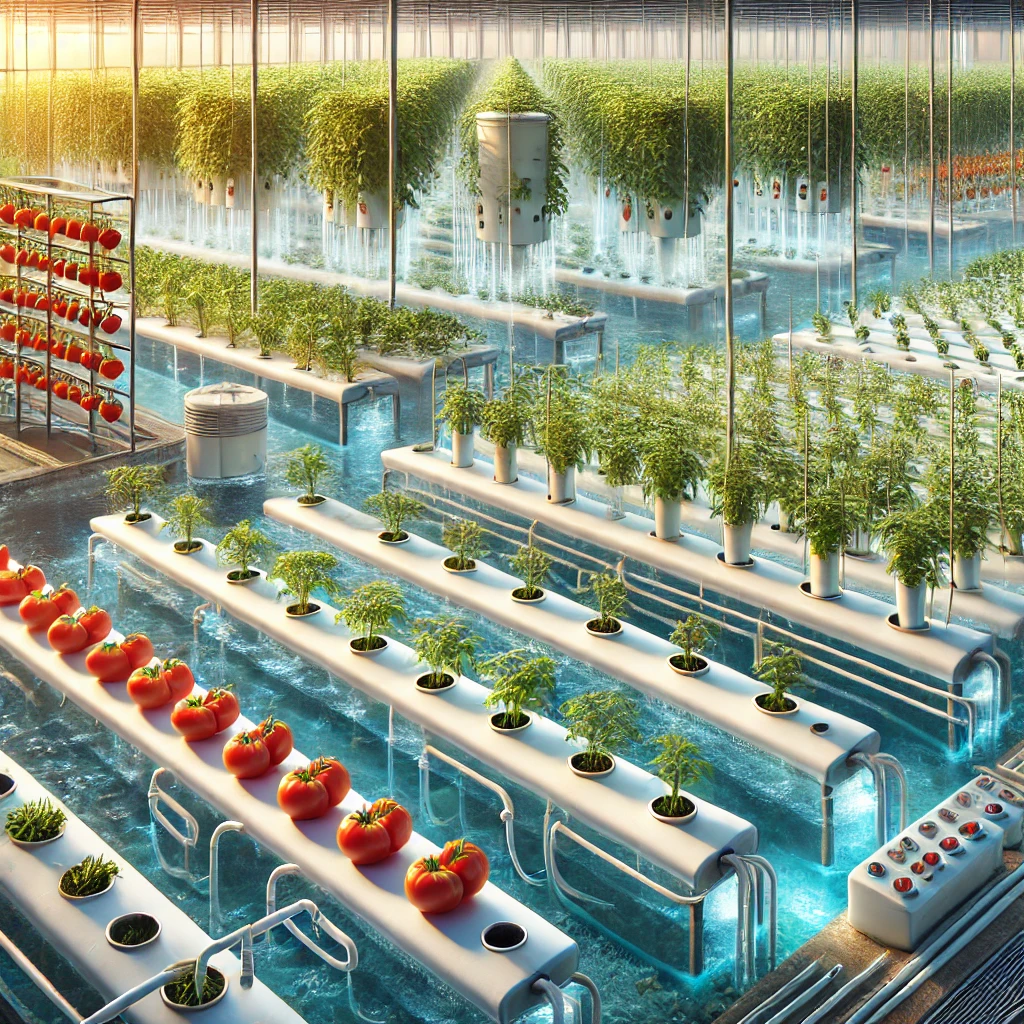
Introduction
Tomatoes are one of the most popular crops for both home gardeners and commercial farmers, thanks to their versatility and flavour. However, growing them in a traditional soil garden can come with challenges such as pests, diseases, and inconsistent yields. That’s where hydroponics comes in—a soilless, water-based growing method that allows for greater control over the growing environment. But with several hydroponic systems available, which one is best for growing tomatoes?
Understanding Hydroponic Systems
Before diving into specific systems, it’s essential to understand what hydroponics is. Hydroponics is a method of growing plants without soil, using mineral nutrient solutions in an aqueous solvent. There are several types of hydroponic systems, each offering unique advantages depending on the crop and the grower’s goals.
Popular Hydroponic Systems:
- Deep Water Culture (DWC)
- Nutrient Film Technique (NFT)
- Ebb and Flow (Flood and Drain)
- Drip System
- Wick System
- Aeroponics
Which Hydroponic System is Best for Growing Tomatoes?
Tomatoes thrive in hydroponic systems that offer a consistent supply of oxygen, water, and nutrients. Here’s a breakdown of how each system works and whether it’s suitable for tomato cultivation.
1. Deep Water Culture (DWC)
Overview: In DWC, the plant roots are suspended in an oxygenated nutrient solution. The roots are constantly submerged, making it an excellent option for fast-growing plants like tomatoes.
Pros:
- Constant access to nutrients
- Less maintenance once set up
- Simple and cost-effective
Cons:
- Risk of root rot if not oxygenated properly
- Water temperature needs to be regulated
Best for: Home gardeners looking for an easy-to-maintain system.
Recommended Product: DWC Hydroponic from Hydroponic Centre
2. Ebb and Flow (Flood and Drain)
Overview: This system works by flooding the growing area with nutrient solution at regular intervals and then draining it back into a reservoir.
Pros:
- Good oxygenation of roots between floods
- Can be automated easily
Cons:
- Needs careful timing
- Potential for pump failures
Best for: Both home gardeners and commercial farmers who want a versatile system.
Recommended Product: Ebb and Flow Systems at Hydroponic Centre
3. Drip System
Overview: In a drip system, nutrient solution is delivered to the plant roots through a network of tubing and emitters.
Pros:
- Scalable for large operations
- Efficient water usage
Cons:
- Emitters can clog
- Requires regular maintenance
Best for: Commercial farmers due to its scalability.
Recommended Product: Drip Irrigation at Hydroponic Centre
4. Aeroponics
Overview: In aeroponics, plant roots are suspended in the air and misted with a nutrient solution.
Pros:
- Excellent oxygenation of roots
- Rapid growth
Cons:
- High maintenance
- Requires precise control of misting
Best for: Advanced growers or commercial setups.
Recommended Product: Aeroponic Systems at Hydroponic Centre
The Best System for Your Tomatoes
When it comes to growing tomatoes, the choice of hydroponic system largely depends on your specific needs and experience level.
- For Beginners: A Deep Water Culture (DWC) or Wick System is a great place to start due to their simplicity and low maintenance.
- For Experienced Growers: The Nutrient Film Technique (NFT) or Aeroponics can offer more precise control and potentially higher yields.
- For Large-Scale Operations: The Drip System or Ebb and Flow systems are scalable and efficient for commercial use.
Common Questions About Growing Tomatoes Hydroponically
1. Do hydroponic tomatoes taste different from soil-grown tomatoes?
Hydroponic tomatoes can be just as flavourful as soil-grown tomatoes if they receive the proper nutrients and light.
2. How long does it take to grow hydroponic tomatoes?
From seed to harvest, it typically takes about 8-12 weeks for hydroponic tomatoes, depending on the variety.
3. What are the main challenges of growing tomatoes hydroponically?
Managing nutrient levels, ensuring proper light, and preventing root rot are some common challenges.
A Simple Explanation for Kids
Imagine you want to grow a tomato plant, but instead of using dirt, you use water that has all the nutrients the plant needs. This water is like a super juice for the plant! You also make sure the roots get plenty of air. This way, the tomato plant can grow big and strong, just like in a garden, but faster and without the need for soil.
Conclusion
Choosing the right hydroponic system for growing tomatoes can make all the difference in the success of your crop. Whether you’re a beginner or a seasoned pro, there’s a system out there that’s perfect for your needs. For those looking to get started or expand their hydroponic setup, be sure to explore the high-quality systems available at the Hydroponic Centre.
Call to Action
Ready to grow the best hydroponic tomatoes? Visit Hydroponic Centre today and explore our wide range of hydroponic systems perfect for your needs!



