
Hydroponics, the innovative method of growing plants without soil, has taken the gardening and agricultural world by storm. But have you ever wondered, when was hydroponics invented? This article delves into the history of hydroponics, tracing its roots from ancient civilizations to its modern-day applications. Whether you’re a home gardener curious about starting your hydroponic setup or a commercial farmer seeking to optimize your yields, understanding the origins of hydroponics can provide valuable insights into its potential.
A Glimpse Into the Past: The Early History of Hydroponics
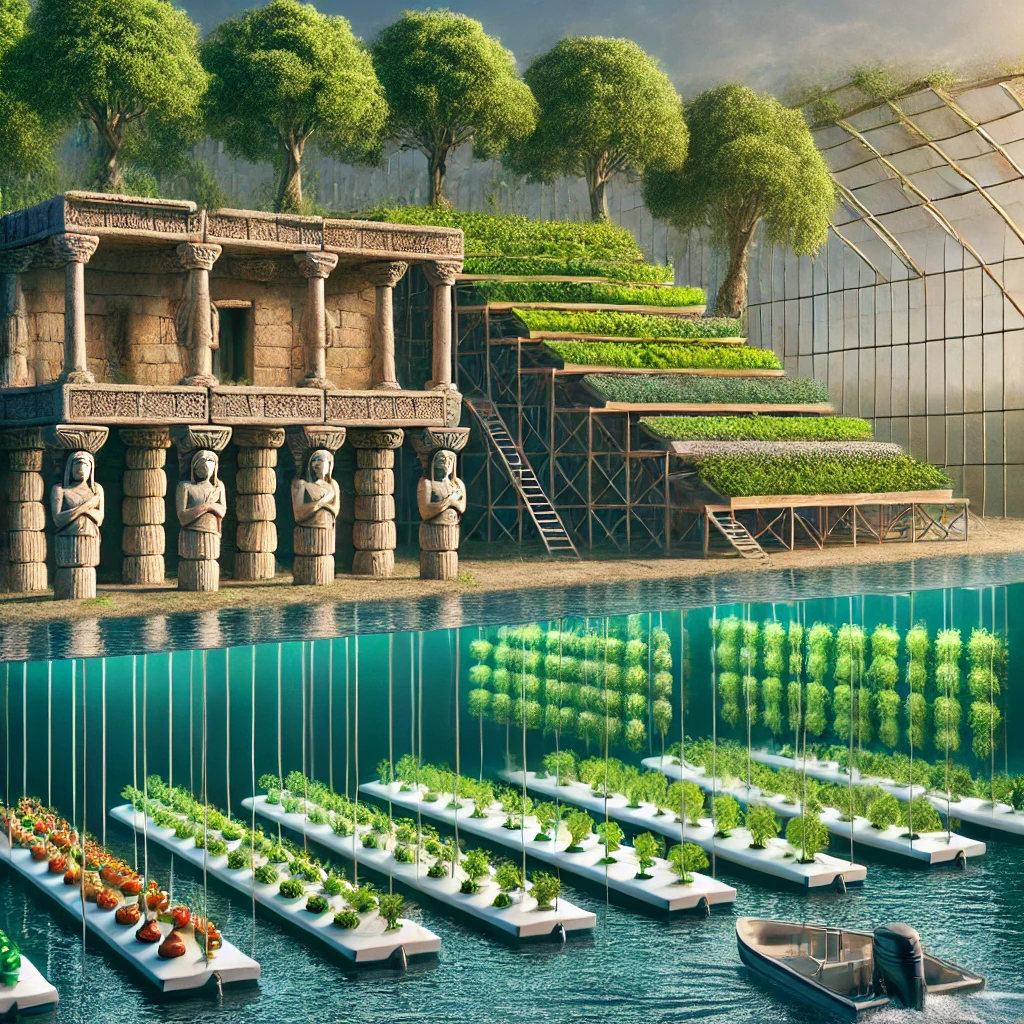
The concept of growing plants without soil isn’t new; it dates back thousands of years. The Hanging Gardens of Babylon, one of the Seven Wonders of the Ancient World, are often cited as an early example of hydroponics. These gardens, built around 600 BCE, reportedly used a primitive form of hydroponics, where plants were irrigated with water drawn from the Euphrates River.
In ancient China, around 300 BCE, the Chinese philosopher Mencius wrote about floating gardens on water, where plants grew with their roots submerged in nutrient-rich water. Similarly, the Aztecs of ancient Mexico developed chinampas, or floating gardens, in the 13th century, where they cultivated crops on rafts made from reeds and mud, anchored in shallow lake beds.
The Birth of Modern Hydroponics
While these ancient methods laid the groundwork, modern hydroponics began to take shape in the 17th century. In 1627, Sir Francis Bacon, an English philosopher and scientist, published “Sylva Sylvarum,” a book that included experiments on water culture. This work sparked interest in the possibilities of growing plants without soil.
Later, in 1699, English scientist John Woodward conducted experiments showing that plants could grow better in water with added nutrients compared to pure water. However, it wasn’t until the 19th century that German botanists Julius von Sachs and Wilhelm Knop made significant strides in hydroponics. They identified the essential minerals required for plant growth, which led to the development of nutrient solutions still used in hydroponics today.
The 20th Century: Hydroponics Gains Traction
The term “hydroponics” was coined by Dr. William Frederick Gericke in the 1920s, a professor at the University of California, Berkeley. Dr. Gericke was the first to successfully grow tomatoes to full maturity using only water and nutrient solutions, demonstrating the potential of hydroponics for large-scale agriculture.
During World War II, hydroponics played a crucial role in food production for American troops stationed on non-arable islands in the Pacific. The U.S. government recognized the value of hydroponics in providing fresh produce where traditional farming was impossible.
The Evolution of Hydroponics: From Niche to Mainstream
In the decades following World War II, hydroponics remained a niche method of cultivation. However, advancements in technology and a growing interest in sustainable agriculture have propelled hydroponics into the mainstream. Today, hydroponics is used worldwide, from commercial farms producing tons of vegetables to small-scale setups in urban apartments.
The Benefits of Hydroponics
Hydroponics offers several advantages over traditional soil-based gardening:
- Water Efficiency: Hydroponic systems use up to 90% less water than conventional farming.
- Space Utilization: Plants can be grown vertically, maximizing space in urban environments.
- Faster Growth: With optimal conditions, plants in hydroponic systems often grow faster and produce higher yields.
- Pest and Disease Control: The controlled environment reduces the risk of soil-borne pests and diseases.
Choosing the Right Hydroponic System for Your Needs
At Hydroponic Centre, we offer a range of products to help you start or expand your hydroponic journey. Here are some recommended products:
- Wilma XL Pot System: Ideal for home gardeners looking to maximize their yield with minimal space. This system is easy to set up and maintain, perfect for growing herbs, leafy greens, and small fruiting plants.
- Autopot System: For commercial farmers, this automatic watering system ensures your plants receive the right amount of nutrients without the need for constant monitoring.
- Canna Aqua Vega & Flores Nutrients: These nutrient solutions are specially formulated for hydroponic systems, ensuring your plants receive the essential minerals for healthy growth.
- Grow Tent Kit: For those who want a controlled environment, our Grow Tent Kits include everything you need to start your hydroponic garden indoors.
Hydroponics for Everyone: Simplifying the Concept
Hydroponics might sound complicated, but it’s a straightforward and efficient way to grow plants. Imagine you’re watering a plant, but instead of soil, the roots are in water. This water has all the nutrients the plant needs, so it grows just as well, or even better, than in soil. That’s hydroponics in a nutshell—giving plants exactly what they need to grow without the mess of dirt!
Conclusion
From ancient civilizations to cutting-edge agricultural technology, hydroponics has a rich and fascinating history. Whether you’re a home gardener or a commercial farmer, hydroponics offers a sustainable and efficient way to grow plants. With the right system and nutrients, you can achieve impressive results and contribute to a greener future.
Explore our range of hydroponic products at Hydroponic Centre and start your hydroponic journey today!



