
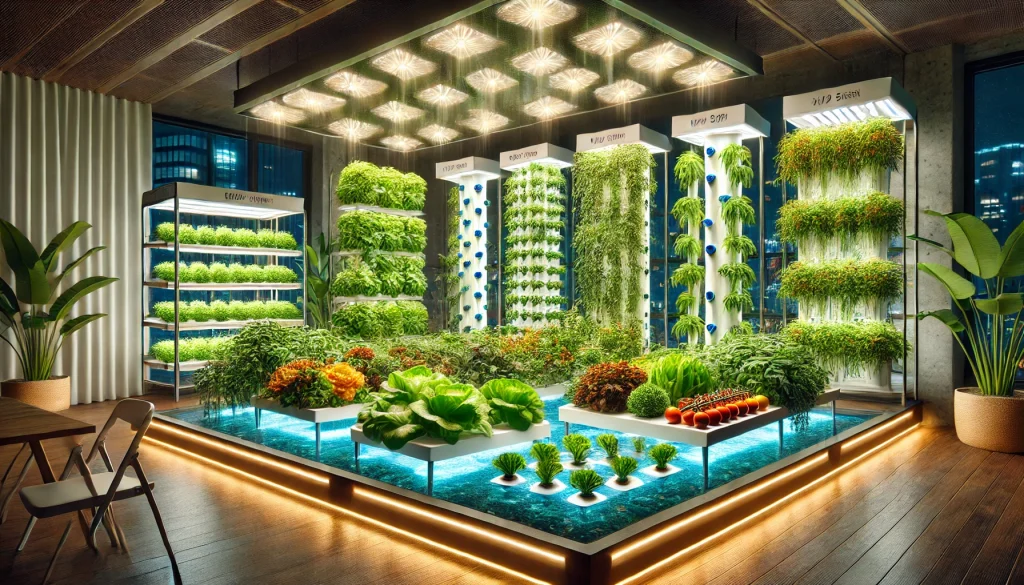
Hydroponic farming represents a leap forward in agricultural technology, combining innovation with sustainability. It offers solutions to some of the most pressing challenges of traditional farming, from land and water scarcity to the need for constant soil quality management. Whether you’re a home gardener seeking efficient growing systems or a commercial farmer looking to optimize crop yields, hydroponics promises a future where food production can thrive despite environmental limitations.
1. What is Hydroponic Farming?
Hydroponics is a method of growing plants without soil, using nutrient-rich water instead. By controlling the environment—light, temperature, and pH levels—growers can accelerate plant growth, reduce water usage, and produce higher yields. Plants such as leafy greens, tomatoes, and herbs are commonly cultivated using hydroponic systems.
2. Why is Hydroponic Farming the Future?
- Efficiency in Water Use: Hydroponics uses up to 90% less water compared to traditional farming, making it ideal for regions facing water shortages.
- Space Conservation: Vertical farming methods allow for high-density planting, enabling farmers to grow more in less space.
- Year-Round Crop Production: With controlled environments, hydroponic systems offer the ability to grow crops year-round, unaffected by weather changes.
- Urban Agriculture: Hydroponics is at the forefront of urban farming, allowing fresh produce to be grown in cities, reducing transportation costs and carbon emissions.
3. Different Hydroponic Systems for Your Needs
Hydroponic systems are diverse and tailored to different levels of expertise and farming goals:
- Drip Systems: Perfect for home gardeners or small-scale farmers. This system delivers nutrients directly to plant roots, ensuring water efficiency and optimal growth.
- Deep Water Culture (DWC): Often used for larger, commercial operations, this system suspends plant roots in nutrient-rich water, promoting fast growth and high yields.
- Aeroponics: A highly advanced system where roots are misted with nutrients, maximizing oxygen exposure and nutrient absorption, leading to quicker growth.
Hydroponic Centre offers a range of products that can help you get started with these systems. For example:
- Growth Technology Nutrients: These hydroponic nutrients are designed to ensure plants get all the essential minerals for growth, leading to healthier crops.
- Flood and Drain Systems: Efficient for home and commercial setups, ensuring controlled watering cycles.
- LED Grow Lights: Offering a spectrum of light to aid plant growth, perfect for growing indoors.
4. Benefits of Hydroponic Farming
- Sustainable Agriculture: Hydroponics drastically reduces water consumption, eliminates the need for pesticides, and can be implemented in spaces where traditional farming is impossible.
- Increased Yields: Hydroponic systems provide the plants with a perfect balance of water, nutrients, and oxygen, which accelerates their growth and increases productivity.
- No Weeds or Pests: Growing in a controlled, soilless environment eliminates many of the common issues faced by traditional farmers, including weeds and soil-borne pests.
5. The Environmental Impact
As the global population grows, the demand for sustainable food production is increasing. Traditional farming methods, while effective, are increasingly challenged by climate change, soil degradation, and water scarcity. Hydroponics addresses these challenges by enabling controlled-environment agriculture, which can flourish even in urban settings and resource-scarce environments.
By reducing the reliance on arable land and cutting down on water usage, hydroponic farming offers a blueprint for a more sustainable and scalable future in agriculture.
6. How Hydroponics is Transforming Urban Farming
Urbanization has reduced available farmland, but hydroponic farming enables cities to become part of the food production chain. With vertical farming and rooftop gardens, fresh produce can be grown within city limits, reducing the transportation footprint and providing communities with local, fresh food.
The use of LED grow lights and vertical hydroponic towers allows growers to stack plants in layers, optimizing space. Carbon filters ensure clean air for optimal plant growth, reducing the need for harmful chemicals.
Conclusion: Why Hydroponics is the Future
Hydroponic farming offers solutions to many of the pressing issues in agriculture today, from water scarcity to urbanization. It’s efficient, sustainable, and can be adapted for a variety of environments, making it a viable path for future food security.
Simplified Version for Kids (10-year-old):
Hydroponic farming is a way of growing plants without soil! Instead of dirt, plants get their food from water mixed with important nutrients. This helps them grow faster, use less water, and makes it easier to grow food in cities or places with little space. It’s like giving the plants a special drink that makes them grow big and strong all year round!
Suggested Hydroponic Products:
- Canna Nutrients – A great option for feeding your hydroponic plants the right nutrients.
- DWC Systems – Best for large-scale commercial setups where you want to maximize plant growth speed.
- LED Grow Lights – Ideal for indoor or urban hydroponic farming, providing the plants with the light they need to grow well indoors.



